Aircraft Maintenance Liability in Aviation Accident Cases
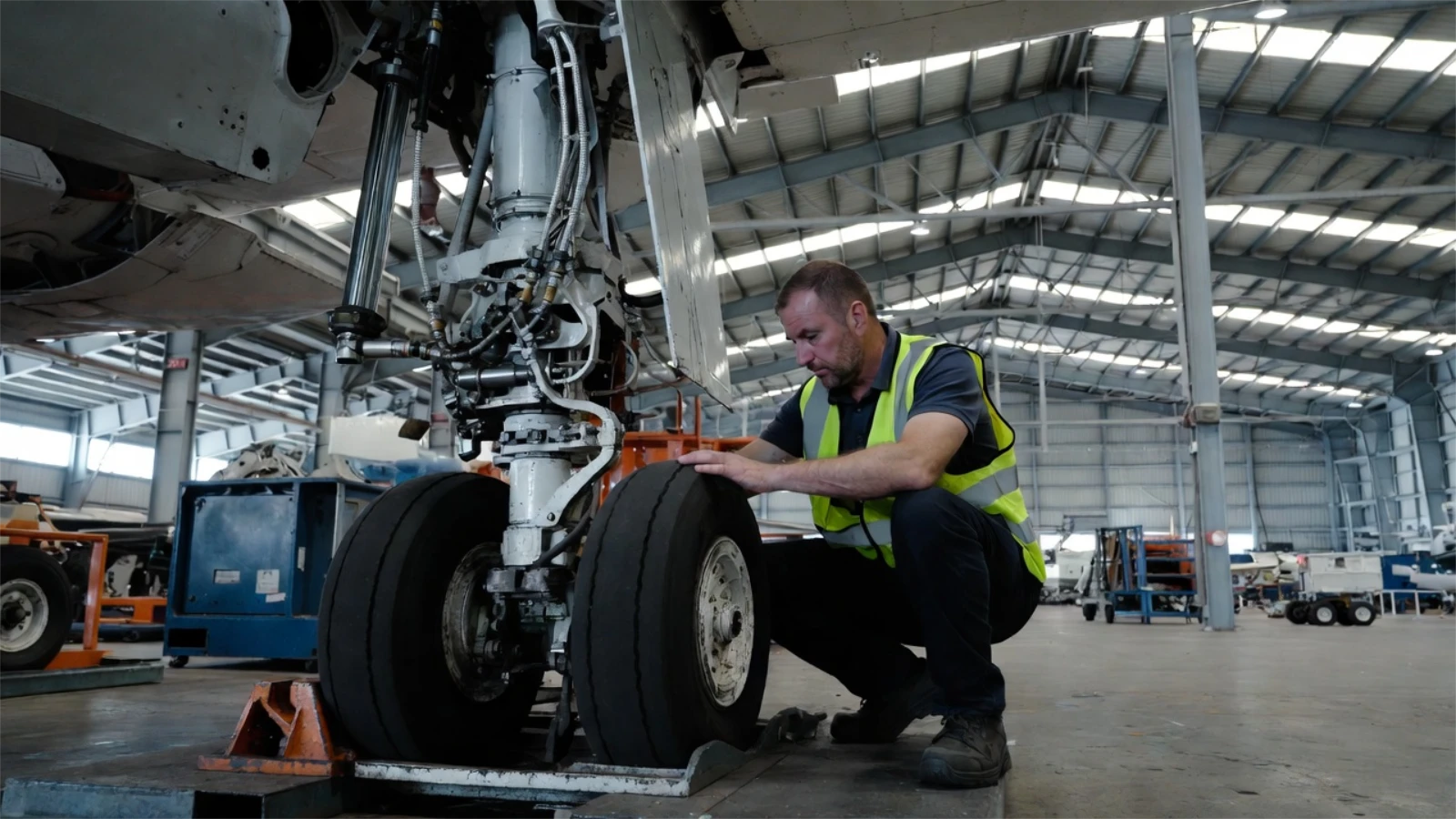
Aircraft maintenance issues can play a significant role in aviation accident litigation. In some cases, the condition of the aircraft, the quality of inspection or repair work, the handling of recurring discrepancies, or the adequacy of maintenance documentation may become central to the factual and legal analysis. Because aviation accidents are investigated through a technical, record-intensive process, maintenance liability questions often arise alongside the NTSB investigation process and may depend heavily on the preservation of records, components, and other evidence.
Maintenance Liability Summary
| Topic | Aircraft Maintenance Liability in Aviation Accident Cases |
|---|---|
| Primary Focus | When maintenance providers, technicians, repair stations, or related entities may face liability in connection with an aviation accident |
| Why It Matters | Improper inspections, repairs, installations, troubleshooting, or recordkeeping may affect aircraft condition, system performance, and accident causation |
| Common Issues | Recurring discrepancies, inspection failures, incomplete repairs, improper parts installation, maintenance record problems, and troubleshooting errors |
| Evidence Often Involved | Maintenance logs, work orders, inspection entries, component histories, service bulletins, manuals, discrepancy reports, and retained aircraft parts |
| Legal Context | Maintenance liability may arise alongside claims involving operators, manufacturers, component suppliers, or other aviation entities |
| Investigation Context | Maintenance issues are often evaluated through wreckage examination, record review, and technical analysis during the post-accident investigation |
| Related Topics | Evidence preservation, NTSB investigations, aviation product liability, private and corporate aircraft accident litigation |
| Page Type | Evergreen aviation law and investigation resource |
Why Maintenance Liability Matters in Aviation Cases
Aviation maintenance is not a peripheral issue. The condition of the aircraft, the adequacy of inspections, the handling of known discrepancies, and the performance of repair or overhaul work may all bear on whether the aircraft was in an appropriate condition for flight. In litigation, those issues can become important not only where a failure appears mechanical on its face, but also where the sequence of events is initially uncertain and the role of maintenance must be reconstructed from records, component examination, and technical analysis.
That is one reason maintenance liability can arise in cases involving private aircraft, charter operations, business aviation, helicopters, and commercial operations. Even where pilot decision-making, weather, or operational factors are also in question, maintenance-related issues may remain relevant if the aircraft’s systems, components, inspections, or repair history are part of the factual record.
Who May Be Involved in Maintenance-Related Claims
Maintenance-related claims are not limited to a single type of defendant. Depending on the aircraft, the maintenance history, and the facts developed in the investigation, relevant entities may include maintenance providers, certificated repair stations, individual mechanics or inspectors, component overhaul facilities, fixed-base operators, aircraft operators responsible for maintenance oversight, and other entities involved in inspection, servicing, or return-to-service decisions.
In some cases, the relevant question is whether maintenance work was performed improperly. In others, the issue may be whether inspections were inadequate, whether recurring discrepancies were handled appropriately, whether required documentation was accurate and complete, or whether a component was installed, repaired, or approved for return to service under circumstances that later become important in the accident analysis. These questions may also overlap with broader operator issues discussed in the firm’s Private & Corporate Aircraft Accident Litigation page.
Common Maintenance Issues in Aviation Accident Litigation
The facts vary from case to case, but several recurring themes appear in maintenance-related aviation litigation. One is the possibility of missed, incomplete, or incorrect inspections. Another is the handling of recurring discrepancies, where a problem appears in the aircraft’s history more than once but the underlying issue may not have been fully resolved. Troubleshooting and corrective action can also become important, particularly where a system or component was serviced shortly before the accident flight.
Other issues may involve installation errors, improper adjustment, the use of an incorrect or unsuitable part, documentation irregularities, or questions surrounding compliance with maintenance instructions, manuals, service information, or inspection requirements. In some matters, the legal analysis may also overlap with product issues, particularly where the condition of a component and the quality of maintenance work must both be examined.
Records Often Matter as Much as the Wreckage
In aviation cases, maintenance liability is often reconstructed through records as much as through physical evidence. Maintenance logs, inspection entries, work orders, discrepancy write-ups, component histories, parts records, manuals, and service-related communications may all help clarify what work was performed, when it was performed, by whom, and under what assumptions or instructions. Those materials can be critical in understanding whether a condition was known, whether prior corrective efforts were adequate, and whether the aircraft was approved for return to service on a supportable factual basis.
If records, removed parts, component histories, or other maintenance-related materials are incomplete, lost, or insufficiently preserved, later technical and legal analysis may become more difficult. In that respect, maintenance liability issues frequently depend on both documentary and physical evidence developed early in the investigation.
Regulatory Compliance and Civil Liability Are Not the Same Question
Maintenance-related aviation claims often involve federal regulations, technical standards, manuals, and certification requirements. Those materials may provide important context for evaluating what inspections or repair work were required and how maintenance was expected to be performed. But the existence of a regulatory framework does not eliminate the need for careful factual analysis in a civil case.
Aviation litigation is not resolved simply by asking whether a regulation exists, nor is it resolved simply by pointing to a maintenance entry in the aircraft records. The legal inquiry may involve what work was actually done, whether the problem addressed was correctly understood, whether the return-to-service decision was justified, and whether the maintenance history and physical evidence support the explanation offered after the accident. For that reason, maintenance liability questions often require close analysis of both technical evidence and the surrounding operational context.
Maintenance Liability May Overlap With Other Liability Theories
Aircraft accidents rarely present only one possible theory. Maintenance liability may overlap with claims involving operators, manufacturers, component suppliers, or others. A component may have been poorly maintained, defectively designed, improperly installed, inadequately inspected, or some combination of those possibilities. Similarly, an operator’s maintenance oversight, recordkeeping, or dispatch decisions may become relevant even where outside maintenance work was also performed.
Also see aircraft and component manufacturer liability.
That overlap is one reason aviation cases should not be reduced too quickly to a single narrative. A post-accident investigation may begin with uncertainty, and the relationship among product issues, maintenance issues, and operational issues may become clearer as records are reviewed, components are examined, and the investigative process develops.
Maintenance Questions Can Arise Across Many Types of Operations
Maintenance liability is not limited to one category of aircraft or one type of accident. It may arise in privately operated piston aircraft, turboprops, business jets, helicopters, and commercial or on-demand operations. It may appear in cases involving engine problems, flight-control issues, avionics or instrument concerns, landing-gear events, pressurization issues, structural failures, or other mechanical and system-related questions.
Because maintenance questions can arise in many operational settings, they are often best understood as part of the broader legal and investigative structure surrounding an aviation accident. They may inform not only the question of accident causation, but also the evaluation of responsibility among multiple entities whose roles differ in certification, operation, inspection, repair, and oversight. Those considerations may shape the liability analysis, but they do not by themselves dictate the legal outcome.
Aviation Accident Litigation
Aircraft maintenance liability can be an important part of aviation accident litigation where inspection history, repair work, component condition, or maintenance documentation bears on the factual record. In many cases, the relevant issues are developed through a combination of record review, technical examination, and the broader accident investigation. For that reason, maintenance-related claims are best analyzed in the larger context of aviation evidence preservation, investigative process, and the distinct legal frameworks that can apply in aircraft accident cases.
Consultation Regarding Aviation Accident Investigations
Families, referring attorneys, and journalists sometimes seek legal consultation or technical insight regarding aviation accidents and investigative issues discussed in these analyses. Inquiries may be directed to Katzman, Lampert & Stoll at the link below.
Aviation Accident Litigation
- Aviation Accident Litigation
- Private and Corporate Aircraft Accident Litigation
- Military & Government Contractor Aviation Litigation
- Complex Aviation Litigation Methodology
- NTSB Investigations & Civil Aviation Claims
- Federal Preemption in Aviation Product Liability
- Defeating GARA Defenses in Aviation Product Liability Litigation
- For Families and Survivors
MICHIGAN OFFICE
Katzman Lampert & Stoll
950 West University Dr #101
Rochester, MI 48307
E-mail: Click to use our Contact Form
Toll-Free: (866) 309-6097
Phone: (248) 258-4800
Fax: (248) 258-2825
COLORADO OFFICE
Katzman Lampert & Stoll
9596 Metro Airport Ave.
Broomfield, CO 80021
E-mail: Click to use our Contact Form
Toll-Free: (866) 309-6097
Phone: (303) 465-3663
Fax: (303) 867-1565
PENNSYLVANIA OFFICE
Katzman Lampert & Stoll
121 N. Wayne Ave. # 205
Wayne, PA 19087
E-mail: Click to use our Contact Form
Toll-Free: (866) 309-6097
Phone: (610) 686-9686
Fax: (610) 686-9687