FAA vs NTSB: Who Investigates Aviation Accidents in the United States?
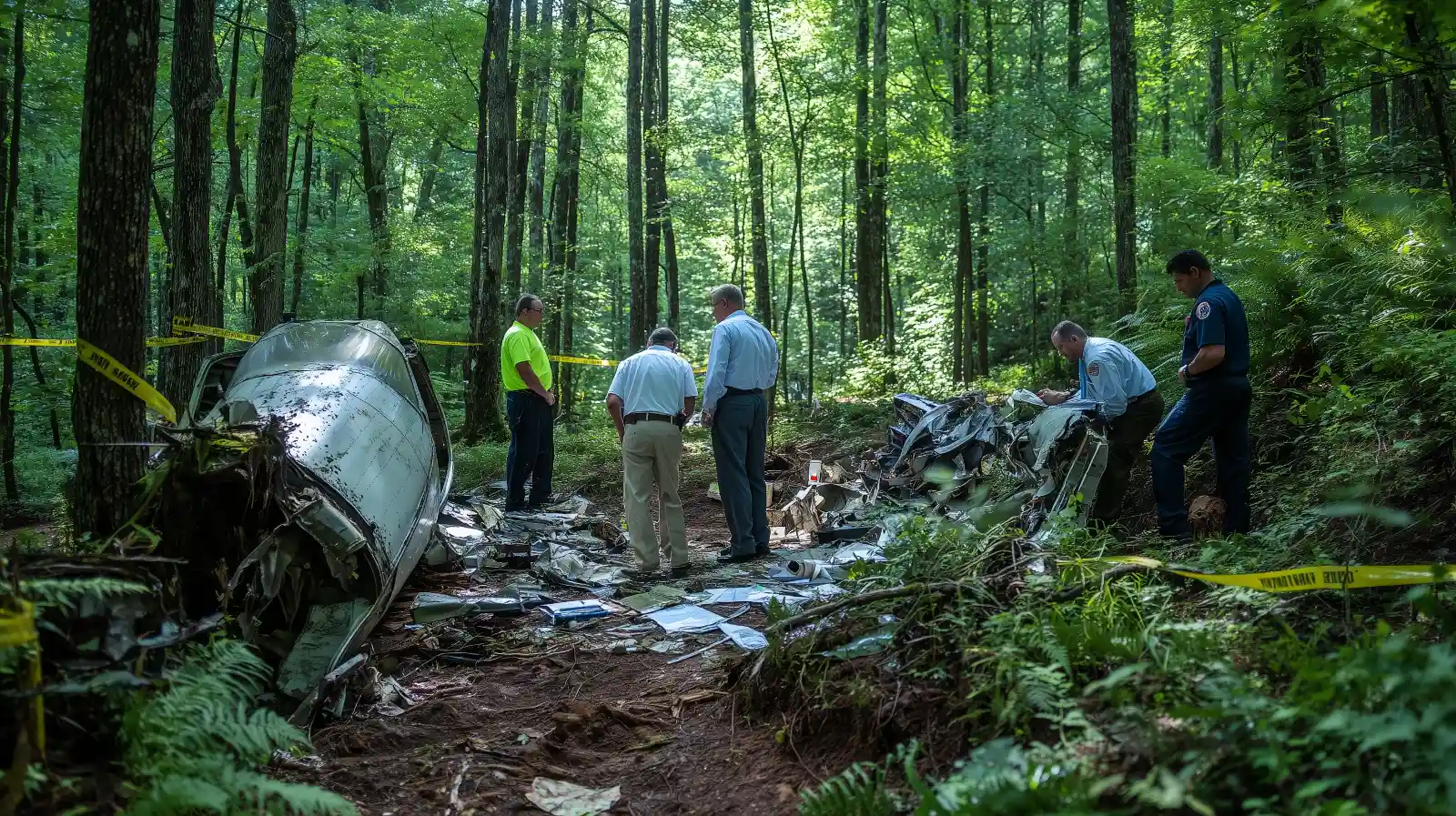
FAA vs. NTSB: Who Does What After an Aviation Accident?
When an aviation accident occurs in the United States, two federal agencies often become involved quickly: the National Transportation Safety Board (NTSB) and the Federal Aviation Administration (FAA). Their names frequently appear together in early news reports, but the agencies serve different roles within the aviation safety system.
Understanding the distinction between these agencies helps journalists explain the post-accident process more accurately. In broad terms, the NTSB leads the accident investigation and issues probable-cause findings, while the FAA regulates aviation safety and may take regulatory or enforcement action where appropriate.
Journalist Quick Facts
| Question | Answer |
|---|---|
| Who investigates aviation accidents in the United States? | The National Transportation Safety Board (NTSB) generally leads civil aviation accident investigations |
| What does the FAA do after a crash? | The FAA provides regulatory expertise and may take safety-related or enforcement action |
| Who determines the cause of a crash? | The NTSB issues the official probable-cause findings in its accident reports |
| Who regulates aviation safety? | The Federal Aviation Administration (FAA) |
| Who assigns legal liability? | No federal agency assigns civil liability; those issues are addressed separately through litigation |
Quick Reference: FAA vs. NTSB
| Agency | Primary Role | Authority After an Accident |
|---|---|---|
| National Transportation Safety Board (NTSB) | Independent accident investigation | Leads the investigation and issues probable-cause findings |
| Federal Aviation Administration (FAA) | Aviation safety regulator | Provides technical and regulatory support and may take regulatory or enforcement action |
What Happens Immediately After an Aviation Accident
| Phase | Primary Agency Role |
|---|---|
| Initial notification and emergency response | Local authorities typically respond first; FAA and NTSB notification may follow under the governing framework |
| Launch of federal investigation | NTSB typically leads the federal accident investigation |
| Technical support and regulatory review | FAA may provide certification, operational, and regulatory expertise |
| Evidence collection and analysis | NTSB investigators examine wreckage, recorded data, maintenance history, and operational information |
| Final report and probable cause | NTSB issues the accident report and probable-cause findings, and may also issue safety recommendations |
The NTSB: Lead Accident Investigator
The National Transportation Safety Board (NTSB) is the federal agency responsible for investigating civil aviation accidents in the United States. When a significant accident occurs, the NTSB generally assumes control of the investigation and directs the overall investigative process.
Investigators may examine the aircraft wreckage, recorded flight information, maintenance history, operational procedures, air traffic control communications, and environmental conditions surrounding the accident.
The agency’s mission is to determine what happened, why it happened, and how similar accidents may be prevented in the future.
A detailed explanation of this process can be found in How the NTSB Investigates an Aircraft Accident.
The FAA: Aviation Regulator
The Federal Aviation Administration (FAA) serves as the United States’ primary aviation safety regulator. The FAA writes and enforces regulations governing aircraft design, certification, maintenance, pilot licensing, and flight operations.
Following an accident, the FAA may participate in the investigation by providing regulatory expertise and technical knowledge related to aircraft certification, maintenance compliance, and operational procedures.
If the investigation reveals possible regulatory violations or broader safety concerns, the FAA may consider regulatory, administrative, or enforcement action.
Typical Responsibilities During an Investigation
| Responsibility | NTSB | FAA |
|---|---|---|
| Lead accident investigation | Yes | No |
| Issue probable-cause findings | Yes | No |
| Issue safety recommendations | Yes | No |
| Regulate aviation safety | No | Yes |
| Enforce federal aviation regulations | No | Yes |
| Participate in technical analysis | Yes | Yes |
Other Participants in Aviation Investigations
Major aviation accident investigations often involve technical participation from aircraft manufacturers, airlines, maintenance providers, engine manufacturers, and labor organizations representing pilots or mechanics.
These participants may assist investigators through the NTSB’s designated party participant system, which allows qualified organizations to provide technical knowledge about the aircraft, operations, or systems involved.
The structure and limits of the investigative process are discussed further in How the NTSB Investigates an Aircraft Accident.
What the NTSB Does Not Do
Although the NTSB issues probable-cause findings in aviation accidents, the agency does not assign civil liability and does not award compensation to victims.
Questions involving responsibility for injuries, damages, or wrongful death are addressed separately in civil litigation.
The interaction between accident investigations and civil proceedings is discussed in NTSB Investigations & Civil Aviation Claims.
Why the Distinction Matters
Because the FAA and NTSB perform different functions, early reporting about aviation accidents sometimes conflates their roles. Statements made by the FAA often concern regulatory oversight, operational issues, or safety actions, while statements issued by the NTSB generally relate to the progress of the accident investigation and its findings.
Recognizing this distinction helps journalists and observers explain the investigative process more accurately and understand how aviation safety improvements may emerge from accident findings and later regulatory action.
Two Agencies, One Objective
Although the FAA and the NTSB serve different institutional roles, their work ultimately supports the same broader objective: improving aviation safety. The NTSB investigates accidents and issues findings and recommendations, while the FAA regulates the aviation system and implements safety rules.
Together, these two agencies form a central part of the United States aviation safety system.
Consultation Regarding Aviation Accident Investigations
Families, referring attorneys, and journalists sometimes seek legal consultation or technical insight regarding aviation accidents and investigative issues discussed in these analyses. Inquiries may be directed to Katzman, Lampert & Stoll at the link below.
Aviation Accident Litigation
- Aviation Accident Litigation
- Private and Corporate Aircraft Accident Litigation
- Military & Government Contractor Aviation Litigation
- Complex Aviation Litigation Methodology
- NTSB Investigations & Civil Aviation Claims
- Federal Preemption in Aviation Product Liability
- Defeating GARA Defenses in Aviation Product Liability Litigation
- For Families and Survivors
MICHIGAN OFFICE
Katzman Lampert & Stoll
950 West University Dr #101
Rochester, MI 48307
E-mail: Click to use our Contact Form
Toll-Free: (866) 309-6097
Phone: (248) 258-4800
Fax: (248) 258-2825
COLORADO OFFICE
Katzman Lampert & Stoll
9596 Metro Airport Ave.
Broomfield, CO 80021
E-mail: Click to use our Contact Form
Toll-Free: (866) 309-6097
Phone: (303) 465-3663
Fax: (303) 867-1565
PENNSYLVANIA OFFICE
Katzman Lampert & Stoll
121 N. Wayne Ave. # 205
Wayne, PA 19087
E-mail: Click to use our Contact Form
Toll-Free: (866) 309-6097
Phone: (610) 686-9686
Fax: (610) 686-9687