AZDPS “Ranger 56” Bell 407 Helicopter Crash Near Flagstaff — Feb. 4, 2026
Updated: Mar 31, 2026
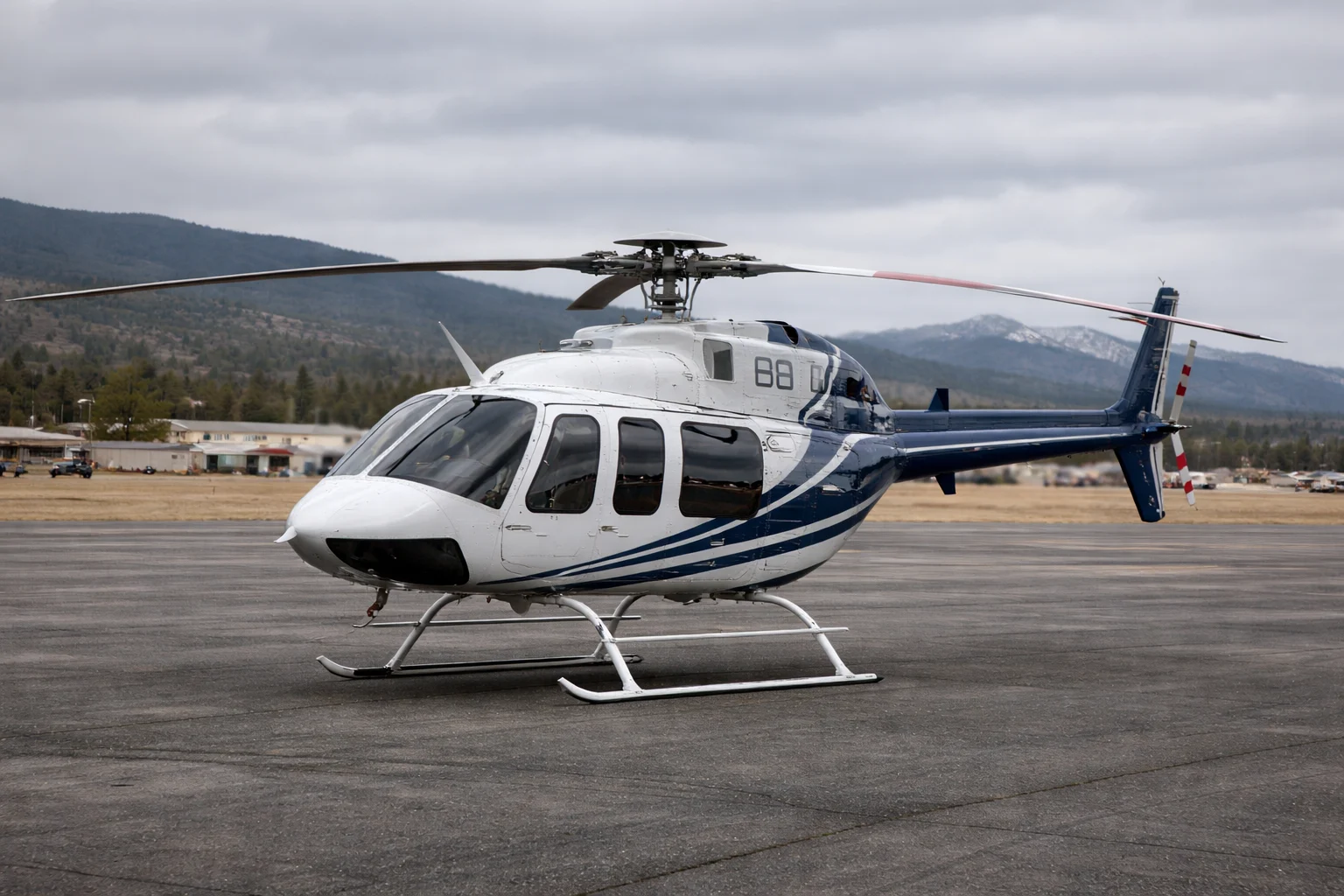
On February 4, 2026, an Arizona Department of Public Safety (AZDPS) Bell 407 helicopter identified as “Ranger 56,” registration N56AZ, crashed near Flagstaff, Arizona while responding to an active shooter incident at the request of the Flagstaff Police Department. Both crewmembers on board were fatally injured. The National Transportation Safety Board (NTSB) later issued a preliminary report providing additional factual detail regarding the flight, aircraft, and early investigative findings.
Accident Summary
| Date | February 4, 2026 |
|---|---|
| Location | Flagstaff area, Arizona, United States |
| Aircraft | Bell 407 helicopter (“Ranger 56”), N56AZ |
| Operation | Public aircraft / public safety tactical air support mission (AZDPS Aviation Bureau) |
| Occupants | 2 total (pilot; tactical flight officer/trooper-paramedic) |
| Fatalities | 2 |
| Phase of Flight | Night maneuvering / climb during tactical support operations |
| Investigation | NTSB preliminary report issued; investigation ongoing |
What Happened
According to public statements and the NTSB preliminary report, the AZDPS crew began a 24-hour shift earlier that morning in Kingman, Arizona, completed a separate rescue mission during the day, returned to Kingman in the evening, and later departed for Flagstaff at approximately 9:10 p.m. to assist law enforcement during an active shooter incident. The helicopter arrived in the Flagstaff area at night and began supporting the operation from the air.
The preliminary report states that the tactical flight officer, seated in the left-front seat, was using a forward-looking infrared (FLIR) camera during the mission. At about 10:16 p.m. local time, while the helicopter was in a slow climb, recorded data showed it began a rapid rotation to the right. The NTSB reported that this sequence coincided with an unidentified verbal sound over the radio, followed by two loud banging sounds. Seconds later, the tactical flight officer transmitted, “we’re going down.” The helicopter subsequently crashed, killing both crewmembers.
Earlier public reporting had naturally raised questions about whether the helicopter might have been struck by gunfire during the active shooter response. The NTSB preliminary report, however, states that investigators found no evidence of ballistic punctures. The report also stated that review of ADS-B data and available video indicated the helicopter’s closest proximity to the suspect when shots were fired was approximately 7,500 feet.
Aircraft and Operational Context
The Bell 407 is a single-engine light helicopter commonly used for law enforcement and public-safety aviation missions, including observation, coordination, surveillance, and tactical support. These operations can impose mission demands that differ from routine transport flying, particularly when they occur at night and require sustained maneuvering, active communications, sensor use, and close coordination with agencies on the ground.
In this occurrence, the NTSB reported the flight was conducted as a public aircraft operation under Part 91. The reported circumstances also suggest investigators will likely continue examining how mission workload, crew coordination, use of onboard mission equipment, altitude and maneuver profile, terrain awareness, night conditions, and aircraft mechanical condition interacted during the final moments of the flight.
Nighttime operating conditions remain especially important in rotorcraft investigations. Although the preliminary report described visual meteorological conditions with clear skies and reported visibility of 10 miles, it also documented night operations, surrounding terrain, and winds aloft in the accident altitude band. AZDPS also reportedly advised investigators that the pilot would have been using night vision goggles during the mission.
Accident Investigation
The NTSB preliminary report now supplies several factual details that substantially advance the public record, while still stopping short of a final causal determination. A practical overview of the federal process—including evidence preservation, staged factual development, and later public reporting—is provided in our explanation of the NTSB investigation process.
In a rotorcraft accident of this kind, investigators commonly develop the factual record across several workstreams, including (1) aircraft systems and drivetrain examination, including engine, transmission, rotor systems, and flight controls, (2) review of maintenance and inspection history, (3) operational timeline and communications, and (4) environmental factors such as winds, lighting, and surrounding terrain. The preliminary report indicates that wreckage documentation and component examination are already central to this investigation.
The NTSB reported that the tail rotor driveshaft and surrounding skin exhibited evidence consistent with contact from a main rotor blade. The tailboom and vertical fin also reportedly showed impact marks and punctures consistent with main rotor blade strikes. In addition, one main rotor blade separated from the hub and was located away from the main wreckage area. These reported findings are important, but they remain preliminary and do not yet establish the final sequence, initiating event, or probable cause.
Operational and Regulatory Issues
Public-safety aviation units typically operate under mission approval procedures, crew coordination requirements, and risk-management policies tailored to tactical and emergency response operations. In an incident involving airborne support during an active shooter response, investigators may review dispatch timing, tasking decisions, operational urgency, coordination with local agencies, cockpit and mission-equipment workload, and any policies relevant to night operations over populated or terrain-constrained areas.
The preliminary report narrows some early public uncertainty, particularly by stating that investigators found no evidence the aircraft was hit by gunfire. At the same time, the report points toward a more technically focused examination of rotor-system sequence, structural contact signatures, maintenance history, and the timing of the in-flight event captured in recorded data and radio communications. As the investigation continues, later factual materials and any final report may further clarify the initiating failure, the in-flight breakup sequence, and whether any operational or maintenance-related factors contributed.
Aviation Accident Litigation
Fatal rotorcraft accidents can involve complex technical and regulatory questions, including maintenance practices, component condition, operational decision-making, training, and oversight. In a fatal aviation case like this one, those issues may also arise in aviation wrongful death claims.
Examples of aviation matters involving technical causation and multi-party issues are summarized on our Representative Aviation Matters page.
For context regarding reported outcomes in aviation-related disputes, see Selected Aviation Verdicts & Settlements.
Broader observations regarding recurring issues in reported aviation accident litigation are discussed in Aviation Crash Litigation: Common Patterns in Reported Cases.
Consultation Regarding Aviation Accident Investigations
Families, referring attorneys, and journalists sometimes seek legal consultation or technical insight regarding aviation accidents and investigative issues discussed in these analyses. Inquiries may be directed to Katzman, Lampert & Stoll at the link below.
Aviation Accident Litigation
- Aviation Accident Litigation
- Private and Corporate Aircraft Accident Litigation
- Military & Government Contractor Aviation Litigation
- Complex Aviation Litigation Methodology
- NTSB Investigations & Civil Aviation Claims
- Federal Preemption in Aviation Product Liability
- Defeating GARA Defenses in Aviation Product Liability Litigation
- For Families and Survivors
MICHIGAN OFFICE
Katzman Lampert & Stoll
950 West University Dr #101
Rochester, MI 48307
E-mail: Click to use our Contact Form
Toll-Free: (866) 309-6097
Phone: (248) 258-4800
Fax: (248) 258-2825
COLORADO OFFICE
Katzman Lampert & Stoll
9596 Metro Airport Ave.
Broomfield, CO 80021
E-mail: Click to use our Contact Form
Toll-Free: (866) 309-6097
Phone: (303) 465-3663
Fax: (303) 867-1565
PENNSYLVANIA OFFICE
Katzman Lampert & Stoll
121 N. Wayne Ave. # 205
Wayne, PA 19087
E-mail: Click to use our Contact Form
Toll-Free: (866) 309-6097
Phone: (610) 686-9686
Fax: (610) 686-9687