
Albuquerque Columbia 400 Emergency Landing Analysis
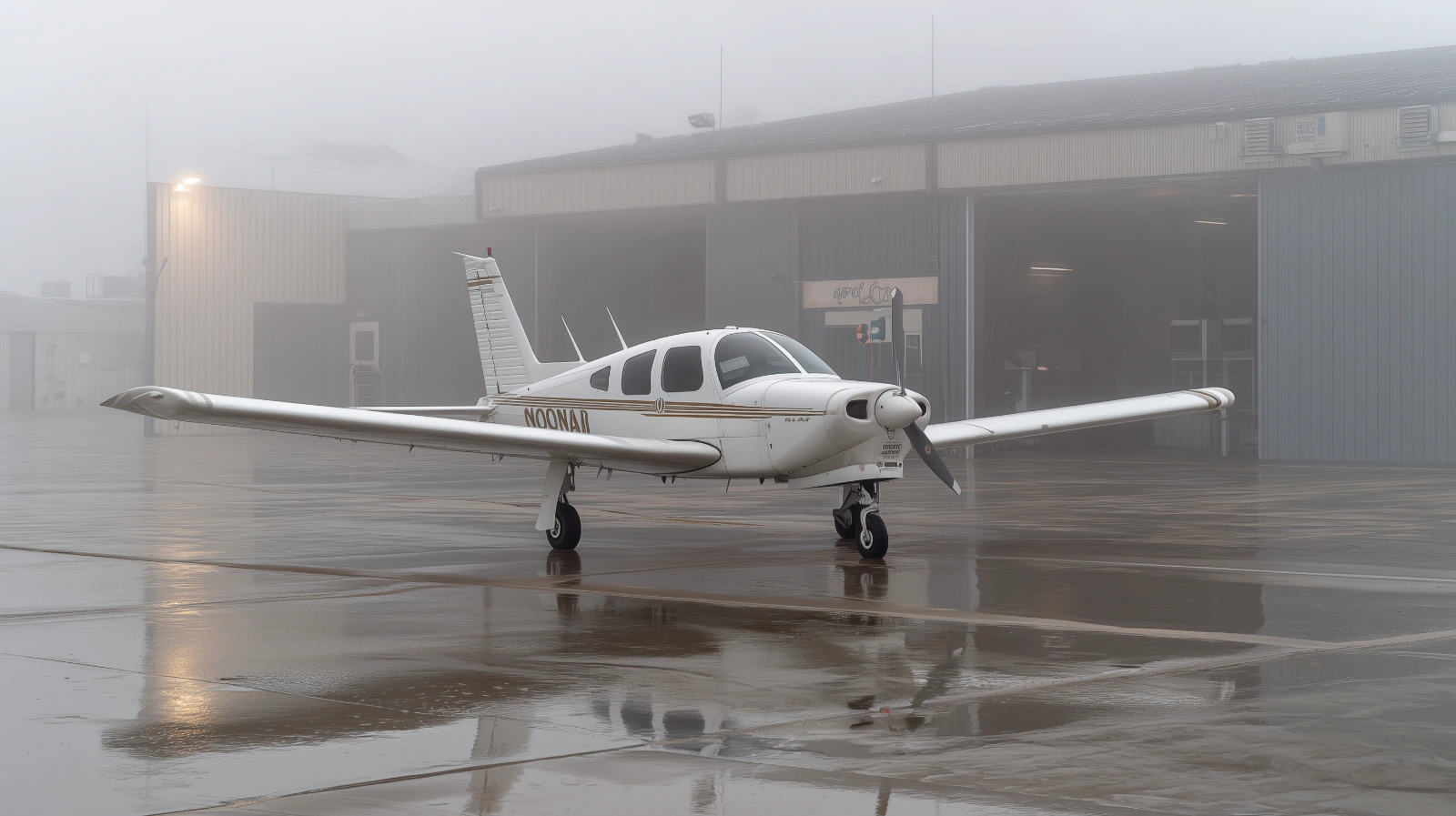
On March 6, 2026, a Lancair LC41-550FG Columbia 400, registration N2516S, crashed at Los Altos Golf Course in Albuquerque, New Mexico, during an attempted emergency landing. The airplane was on a private flight from Wichita, Kansas, to Albuquerque. Two people were on board. One occupant was fatally injured and the other was reported hospitalized in critical condition. The accident is identified in public aviation records and local reporting as a federal aviation accident investigation.
Accident Summary
| Date | March 6, 2026 |
|---|---|
| Location | Albuquerque, New Mexico, United States |
| Aircraft | Lancair LC41-550FG Columbia 400, N2516S |
| Operation | Private flight |
| Mission | Not publicly reported |
| Occupants | 2 persons on board |
| Fatalities | 1 |
| Phase of Flight | Attempted emergency landing |
| Investigation | NTSB |
What Happened
Public reporting states that the airplane departed Wichita and was headed to Albuquerque. During the arrival portion of the flight, the pilot attempted an emergency landing at Los Altos Golf Course in northeast Albuquerque. The airplane then crashed on the course.
Local responders were dispatched shortly before noon. Albuquerque Fire Rescue reported that the airplane was heavily damaged but not on fire. Two occupants were removed from the wreckage and taken to a hospital. State police later identified the person who died as Deborah Rhinesmith of Kansas. The identity of the surviving occupant had not been publicly released in the reporting provided here.
The currently available source material is limited. Public reports do not describe the airplane’s altitude, speed, exact flight path over Albuquerque, communications with air traffic control, or the reason the pilot elected to attempt a landing on the golf course rather than continue to an airport. Those are among the factual questions that typically become clearer only after investigators review radar data, recorded communications, witness accounts, and the aircraft itself.
At this stage, the known sequence is narrow but clear: a privately operated Columbia 400 was inbound to Albuquerque from Wichita, an emergency landing was attempted at an off-airport location, and the aircraft came down on a golf course, resulting in one fatality and one serious injury. The reported facts establish the basic operational setting, but they do not resolve why the emergency developed or why this landing area was selected.
Aircraft and Operational Context
The Columbia 400 is a high-performance, single-engine piston airplane commonly used for cross-country transportation. Aircraft in this category are designed for operations to and from conventional airports and runways. That context matters here because an off-airport landing in a fast, complex personal aircraft presents different margins and constraints than a routine landing on a prepared surface.
A golf course may appear open from the air, but it is not an aerodrome. Fairways, trees, cart paths, water features, irrigation structures, fencing, and uneven terrain can all affect whether an apparent landing area is actually usable. Even when a site looks accessible, the pilot may have limited time to evaluate length, slope, surface quality, and obstacles before committing to it.
The reporting also states that the airplane was not on fire when responders arrived. That is relevant as a description of the post-impact scene, but it does not establish anything further about the aircraft’s systems or the reason for the emergency landing attempt. The reported substantial damage confirms a severe impact sequence, but not the event that preceded it.
Because the flight was arriving in the Albuquerque area, investigators will likely examine the destination environment closely, including the aircraft’s position relative to nearby airports and any apparent landing alternatives. Those details were not publicly reported in the source material provided for this article.
Accident Investigation
In a U.S. civil aviation accident such as this one, the NTSB typically leads the federal investigation, with FAA support in technical and regulatory areas. Readers looking for broader background can review the NTSB investigation process. The first phase usually focuses on documenting the wreckage, mapping the accident site, recording aircraft damage, and preserving time-sensitive evidence.
Investigators commonly examine major airframe and engine components, review any available avionics or stored data, and compare physical findings with radar information, communications records, maintenance history, and witness statements. In a cross-country personal flight, they may also review the aircraft’s recent use, inspection status, and the sequence of operational decisions made after the emergency developed.
Manufacturers, maintenance organizations, and other designated parties may assist the NTSB in technical areas of the investigation under agency supervision. Early public information in accidents like this is often incomplete and may be refined as more evidence is collected. A preliminary report may later provide additional factual detail, while a final report is typically issued much later after the broader investigation is complete.
Operational and Regulatory Issues
The central operational issue raised by the reported facts is the attempted off-airport emergency landing near the destination area. That matters because once a pilot determines that a runway may not be reachable, the flight shifts from normal arrival planning to immediate site selection and energy management.
In plain language, an emergency landing away from an airport is often a problem of time, distance, and terrain. A site that looks open from above may still offer little usable margin once the aircraft descends closer to it. An off-airport landing area can appear adequate from the air but still leave very little room for rough ground, slope, or obstacles once the pilot commits to it. That is why investigators will examine where the airplane was relative to available airports and what landing options were realistically available at that point in the flight.
Investigators will also examine the decision sequence that led to the golf-course landing attempt. The operational question is not simply why the airplane did not land at an airport, but whether the circumstances confronting the flight left enough altitude, distance, and control margin to reach one safely. If an off-airport landing has already become necessary, touchdown area, approach path, and obstacle clearance become immediate priorities.
From a regulatory perspective, emergency situations can temporarily change the pilot’s priorities from routine traffic flow and standard arrival procedures to the immediate safe outcome of the flight. That does not reduce scrutiny. It means investigators will study how the emergency developed, what options were available, and how the final landing area related to the constraints present at the time.
Aviation Accident Litigation
Civil litigation arising from an aviation accident, when it occurs, proceeds separately from the federal safety investigation. The NTSB’s role is to determine what happened and why from a transportation-safety standpoint. A civil case addresses legal duties, causation standards, and damages under applicable law. In a fatal private-aircraft event like this, those issues may arise in private aircraft accident litigation.
In aviation matters, factual development may involve maintenance records, operational history, technical analysis, and testimony from individuals with knowledge of the aircraft, flight, or related services.
For journalists and other readers following a developing event, it is important to keep those tracks distinct. An NTSB investigation is not a civil case, and a civil case does not replace the NTSB’s safety function. In any newly reported accident, the factual picture usually becomes more precise only as the official investigation progresses and additional records become public.
Consultation Regarding Aviation Accident Investigations
Families, referring attorneys, and journalists sometimes seek legal consultation or technical insight regarding aviation accidents and investigative issues discussed in these analyses. Inquiries may be directed to Katzman, Lampert & Stoll at the link below.
Aviation Accident Litigation
- Aviation Accident Litigation
- Private and Corporate Aircraft Accident Litigation
- Military & Government Contractor Aviation Litigation
- Complex Aviation Litigation Methodology
- NTSB Investigations & Civil Aviation Claims
- Federal Preemption in Aviation Product Liability
- Defeating GARA Defenses in Aviation Product Liability Litigation
- For Families and Survivors
MICHIGAN OFFICE
Katzman Lampert & Stoll
950 West University Dr #101
Rochester, MI 48307
E-mail: Click to use our Contact Form
Toll-Free: (866) 309-6097
Phone: (248) 258-4800
Fax: (248) 258-2825
COLORADO OFFICE
Katzman Lampert & Stoll
9596 Metro Airport Ave.
Broomfield, CO 80021
E-mail: Click to use our Contact Form
Toll-Free: (866) 309-6097
Phone: (303) 465-3663
Fax: (303) 867-1565
PENNSYLVANIA OFFICE
Katzman Lampert & Stoll
121 N. Wayne Ave. # 205
Wayne, PA 19087
E-mail: Click to use our Contact Form
Toll-Free: (866) 309-6097
Phone: (610) 686-9686
Fax: (610) 686-9687