

Cessna 750 Runway Excursion During Landing at Telluride
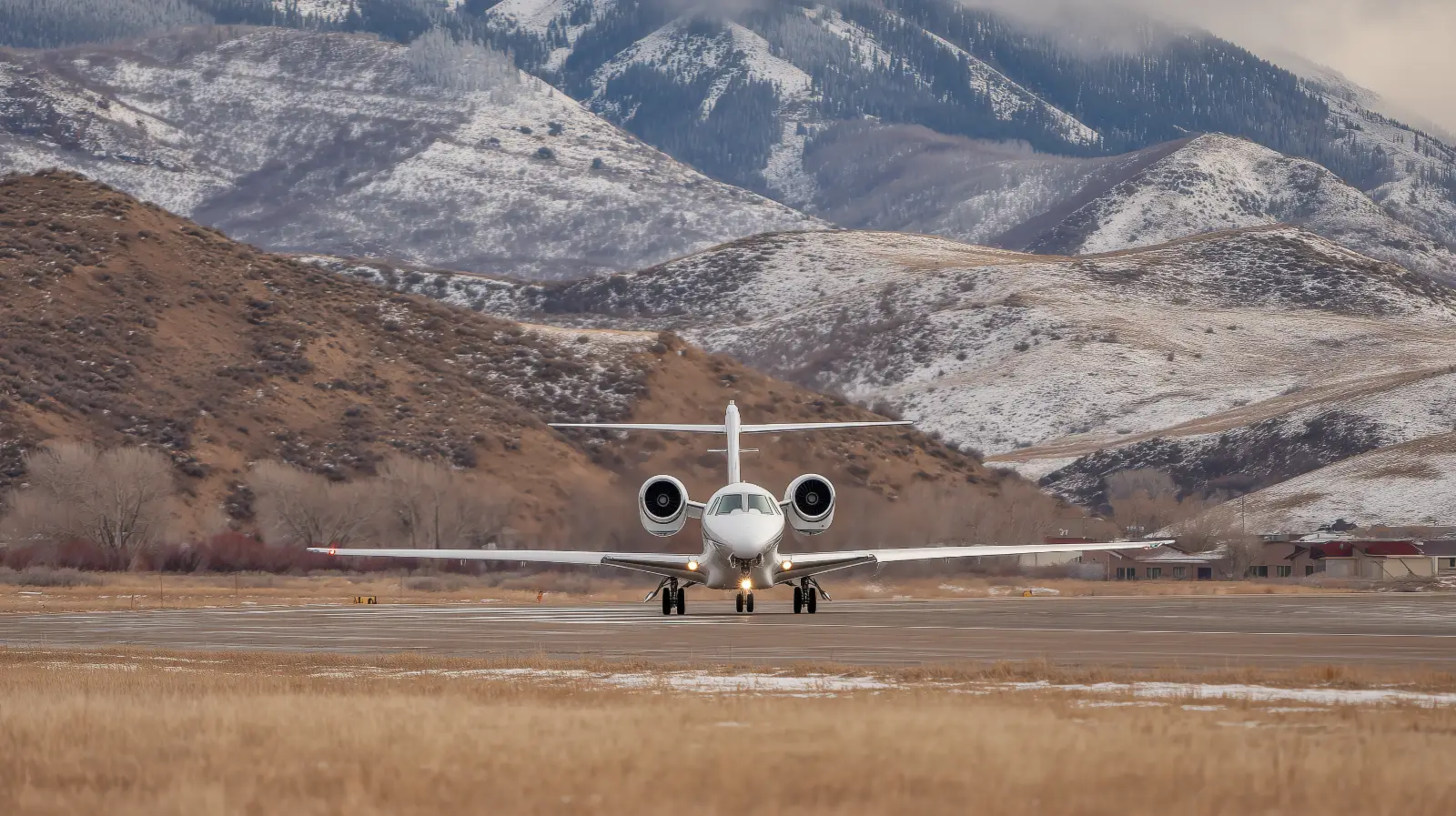
On January 13, 2026, a Cessna 750 near Mountain Village, Colorado, was substantially damaged during landing at Telluride Regional Airport. The airplane touched down on runway 9, then departed the side of the runway after the crew encountered shifting wind, a strong gust from the left, and a loss of directional control during the rollout. Federal investigators are examining the accident with particular focus on wind conditions, the landing rollout sequence, and the airplane’s response to corrective control inputs.
Accident Summary
| Date | January 13, 2026 |
|---|---|
| Location | Mountain Village, Colorado, United States |
| Aircraft | Cessna 750, N772XJ |
| Operation | Part 135 on-demand air taxi; Teterboro, New Jersey to Mountain Village, Colorado |
| Occupants | 3 total (1 passenger; 2 crew) |
| Fatalities | 0 |
| Phase of Flight | Landing |
| Investigation | NTSB; FAA assisting |
What Happened
The NTSB preliminary report states that the flight was descending into Telluride Regional Airport when the crew encountered turbulent conditions and a strong northwesterly wind that produced airspeed fluctuations of 5 to 10 knots. The pilots aligned with runway 9, reported that the wind was shifting between north and northeast, and described the touchdown as smooth and on the centerline.
According to the crew, spoilers were deployed after touchdown and forward pressure was applied on the control column to keep the nosewheel in contact with the runway. Shortly afterward, the airplane encountered a strong gust from the left, identified as the north side, and the airplane veered right while the nose rose momentarily before the nosewheel contacted the runway again.
The pilots then deployed thrust reversers and applied left rudder, after which the airplane veered sharply left. They reported using right rudder, maximum braking, and reverse thrust in an effort to regain directional control, but the airplane continued left and exited the runway. During the excursion, the left main landing gear sideloaded, the right main gear collapsed, and the fuselage sustained substantial damage.
Aircraft and Operational Context
The accident aircraft was a Cessna 750 operated by Red Wings Aeroplane, LLC under a Part 135 on-demand air taxi certificate. The flight departed Teterboro, New Jersey, on an IFR flight plan and was arriving at Telluride Regional Airport, which the report identifies through the KTEX observation point at 9,091 feet mean sea level.
The preliminary report lists day visual meteorological conditions at the airport, with clear skies, 10 miles visibility, a temperature of 8 degrees Celsius, a dew point of minus 8 degrees Celsius, and an altimeter setting of 30.41 inches of mercury. The reported surface wind at 1215 local was 020 degrees at 4 knots, which is a modest value that does not fully match the stronger and more variable wind conditions the crew described during the descent and landing rollout.
No injuries were reported to the two pilots or the passenger. The wreckage location was recorded at latitude 37.953806 and longitude -107.90875, and the event sequence centered on runway alignment, touchdown, spoiler deployment, reverser use, rudder inputs, and the airplane’s directional response on the ground.
Accident Investigation
Because this is a preliminary report, the factual record remains limited and subject to change as investigators gather more information. That process commonly includes airframe examination, landing gear damage analysis, runway-excursion evidence review, and comparison of crew statements with airport weather observations and other data sources used in the NTSB investigation process.
The NTSB reported that the airplane was retained for further examination and also noted that the pilots stated the airplane did not respond normally when they corrected for the right drift. That makes the airplane’s ground-handling response, the timing of rudder and reverse-thrust inputs, and the structural loading seen in the left and right main gear important areas for further technical review.
The agency also stated that it did not travel to the scene and classified the event as a Class 3 investigation, with an FAA participant from Salt Lake City identified in the report. As additional evidence is developed, the public record may expand through factual updates, specialist examinations, and further analysis of the landing rollout sequence and ground-directional response.
Operational and Regulatory Issues
This accident arose during landing rollout at a high-elevation destination where localized wind behavior can become operationally important even when the routine airport observation appears less severe. For Part 135 operators, events like this often draw attention to stabilized approach planning, touchdown and rollout control technique, use of spoilers and thrust reversers, and how crews assess changing wind near the runway environment.
The difference between the crew’s account of turbulence and strong gusting wind and the airport’s reported wind of 020 degrees at 4 knots may become a meaningful factual point, although the preliminary report does not resolve it. Investigators may examine whether the relevant conditions involved localized gusts, terrain-driven variability, timing differences between observation and touchdown, or other factors affecting runway-direction control.
Aviation Accident Litigation
Runway-excursion cases involving Part 135 business-aircraft operations can involve overlapping questions about aircraft performance, airport and weather information, crew actions, operator procedures, maintenance history, and the scope of documented aircraft damage. Civil claims that follow these events are often evaluated within the framework of private aircraft accident litigation.
When an accident occurs during landing, attorneys and technical experts often work through aircraft records, crew training materials, weather products, and postaccident examination findings to determine which facts are established and which remain open.
Consultation Regarding Aviation Accident Investigations
Families, referring attorneys, and journalists sometimes seek legal consultation or technical insight regarding aviation accidents and investigative issues discussed in these analyses. Inquiries may be directed to Katzman, Lampert & Stoll at the link below.
Aviation Accident Litigation
- Aviation Accident Litigation
- Private and Corporate Aircraft Accident Litigation
- Military & Government Contractor Aviation Litigation
- Complex Aviation Litigation Methodology
- NTSB Investigations & Civil Aviation Claims
- Federal Preemption in Aviation Product Liability
- Defeating GARA Defenses in Aviation Product Liability Litigation
- For Families and Survivors
MICHIGAN OFFICE
Katzman Lampert & Stoll
950 West University Dr #101
Rochester, MI 48307
E-mail: Click to use our Contact Form
Toll-Free: (866) 309-6097
Phone: (248) 258-4800
Fax: (248) 258-2825
COLORADO OFFICE
Katzman Lampert & Stoll
9596 Metro Airport Ave.
Broomfield, CO 80021
E-mail: Click to use our Contact Form
Toll-Free: (866) 309-6097
Phone: (303) 465-3663
Fax: (303) 867-1565
PENNSYLVANIA OFFICE
Katzman Lampert & Stoll
121 N. Wayne Ave. # 205
Wayne, PA 19087
E-mail: Click to use our Contact Form
Toll-Free: (866) 309-6097
Phone: (610) 686-9686
Fax: (610) 686-9687