

Cessna T210M Crash Near Deerfield, Illinois During PWK Approach
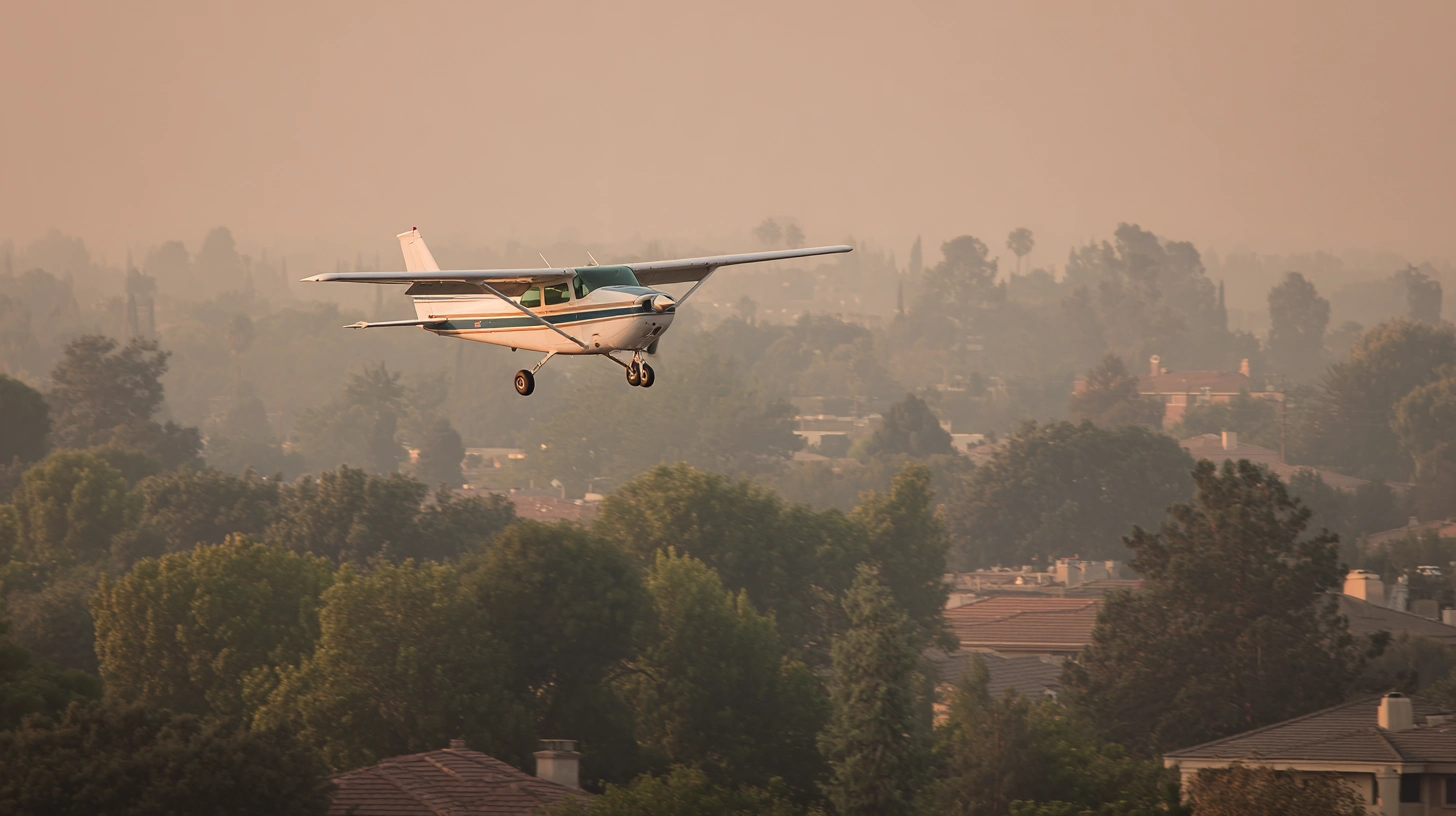
On March 4, 2026, a Cessna T210M crashed near Deerfield, Illinois. The airplane struck 50-foot trees, hit the roof of a townhouse, and came to rest inverted in a residential backyard during the RNAV Runway 16 approach to Chicago Executive Airport. Federal investigators are examining the nighttime instrument approach sequence, including repeated low altitude alerts, course deviation, and the airplane’s final descent in instrument meteorological conditions.
Accident Summary
| Date | March 4, 2026 |
|---|---|
| Location | Deerfield, Illinois, United States |
| Aircraft | Cessna T210M, N19FB |
| Operation | Part 91 personal flight; en route to Chicago Executive Airport (PWK) from an unknown departure point |
| Occupants | 1 total |
| Fatalities | 1 |
| Phase of Flight | Approach |
| Investigation | NTSB with FAA participation |
What Happened
The preliminary report states that the first ADS-B data for the airplane appeared southeast of Necedah Airport in Wisconsin at about 2040. The pilot later filed an in-flight IFR flight plan at about 2049 while continuing toward PWK, roughly 150 nautical miles to the southeast.
During the RNAV Runway 16 approach, air traffic control issued a low altitude alert when the airplane was about 6 nautical miles northwest of the airport. The pilot acknowledged that alert, the airplane climbed about 100 feet, and then it began descending again. After a second low altitude alert, the pilot replied, “I am climbing back.” Controllers then advised that the airplane was drifting west of course, and no further transmissions were reported.
The airplane hit trees about 50 feet tall before striking a townhouse roof and coming to rest inverted in a backyard. A resident reported that the engine sounded loud and operating before impact. Investigators documented a debris field about 550 feet long on a magnetic heading of about 050 degrees, with the left wingtip and part of the left aileron near the beginning of the wreckage path.
Aircraft and Operational Context
The accident aircraft was a Cessna T210M operated under Part 91 as a personal flight. The preliminary report says the pilot’s logbook showed prior flights to Necedah Airport in the months before the accident, but the point of departure for the accident flight was not publicly reported.
Weather at PWK at 2139 local, about 3 nautical miles from the accident site, reflected instrument conditions at night. Reported visibility was 0.75 miles, the lowest cloud condition was 200 feet above ground level, the ceiling was indefinite, temperature and dew point were both 3 degrees Celsius, wind was from 070 degrees at 5 knots, and the altimeter setting was 30.03 inches of mercury.
Wreckage findings noted by investigators were consistent with significant impact damage. The propeller assembly had separated from the engine and all three blades were twisted with rotational scoring; two blades also showed leading-edge gouges. The fuel tanks, including the auxiliary tanks, were compromised, although first responders reported a strong smell of aviation fuel and the removed fuel strainer bowl contained fuel. The fuel selector was found on the right tank, and the crushed instrument panel left the altimeter showing 30.04 inches of mercury in the Kollsman window.
Accident Investigation
This remains a preliminary investigation, and the NTSB states that the information is subject to change as additional evidence is developed. Readers looking for a broader overview of how federal investigators document wreckage, operational history, recorded data, weather, and witness evidence can review the firm’s summary of the NTSB investigation process.
At this stage, the published record centers on the instrument approach sequence, the pilot’s responses to two low altitude alerts, and the airplane’s position west of the published course shortly before impact. The report also preserves several specific factual markers investigators will continue to test, including the 2145 local accident time, the 050-degree debris path, and the contrast between the PWK altimeter setting and the cockpit altimeter indication found after the crash. Additional review of the aircraft’s systems, engine, propeller, avionics, and operational history will likely shape later factual updates. Examples of how technical evidence develops across complex cases appear in the firm’s representative aviation matters.
Operational and Regulatory Issues
The preliminary facts put the accident squarely in a high-workload arrival environment: night conditions, IFR flight, low visibility, a 200-foot cloud layer, and a precision-style lateral and vertical path that required close tracking during the RNAV Runway 16 approach. In that setting, investigators will typically examine approach setup, navigation source selection, altitude management, workload, instrument currency, and any human factors that may have affected situational awareness.
The report does not identify any preimpact fire, explosion, or confirmed power loss. It also does not state a final causal finding. Because this was a Part 91 personal operation, the regulatory review may include pilot qualifications, recent instrument experience, aircraft maintenance status, and any available information about fuel planning, but those details have not yet been publicly reported.
Aviation Accident Litigation
When a fatal crash occurs during an instrument approach into a residential area, legal analysis often follows the same evidentiary path as the technical investigation. That can include aircraft maintenance records, avionics and navigation equipment history, pilot training and proficiency records, ATC communications, meteorological data, and damage reconstruction. The firm’s overview of aviation accident litigation explains how those categories of evidence are commonly evaluated in civil cases.
Case development may also depend on whether later investigative work identifies issues involving aircraft systems, component performance, maintenance practices, airport or procedure context, or other operational contributors. For examples of past outcomes in aviation-related matters, see the firm’s selected aviation verdicts and settlements.
As the NTSB releases more factual material, parties and counsel will be able to assess whether the evidence points only to pilot operation or whether a broader liability picture emerges. Broader context on results and valuation patterns can be found in the firm’s discussion of aviation crash verdict trends.
Consultation Regarding Aviation Accident Investigations
Families, referring attorneys, and journalists sometimes seek legal consultation or technical insight regarding aviation accidents and investigative issues discussed in these analyses. Inquiries may be directed to Katzman, Lampert & Stoll at the link below.
Aviation Accident Litigation
- Aviation Accident Litigation
- Private and Corporate Aircraft Accident Litigation
- Military & Government Contractor Aviation Litigation
- Complex Aviation Litigation Methodology
- NTSB Investigations & Civil Aviation Claims
- Federal Preemption in Aviation Product Liability
- Defeating GARA Defenses in Aviation Product Liability Litigation
- For Families and Survivors
MICHIGAN OFFICE
Katzman Lampert & Stoll
950 West University Dr #101
Rochester, MI 48307
E-mail: Click to use our Contact Form
Toll-Free: (866) 309-6097
Phone: (248) 258-4800
Fax: (248) 258-2825
COLORADO OFFICE
Katzman Lampert & Stoll
9596 Metro Airport Ave.
Broomfield, CO 80021
E-mail: Click to use our Contact Form
Toll-Free: (866) 309-6097
Phone: (303) 465-3663
Fax: (303) 867-1565
PENNSYLVANIA OFFICE
Katzman Lampert & Stoll
121 N. Wayne Ave. # 205
Wayne, PA 19087
E-mail: Click to use our Contact Form
Toll-Free: (866) 309-6097
Phone: (610) 686-9686
Fax: (610) 686-9687