
Charter Operator Liability and Part 135 Accident Claims
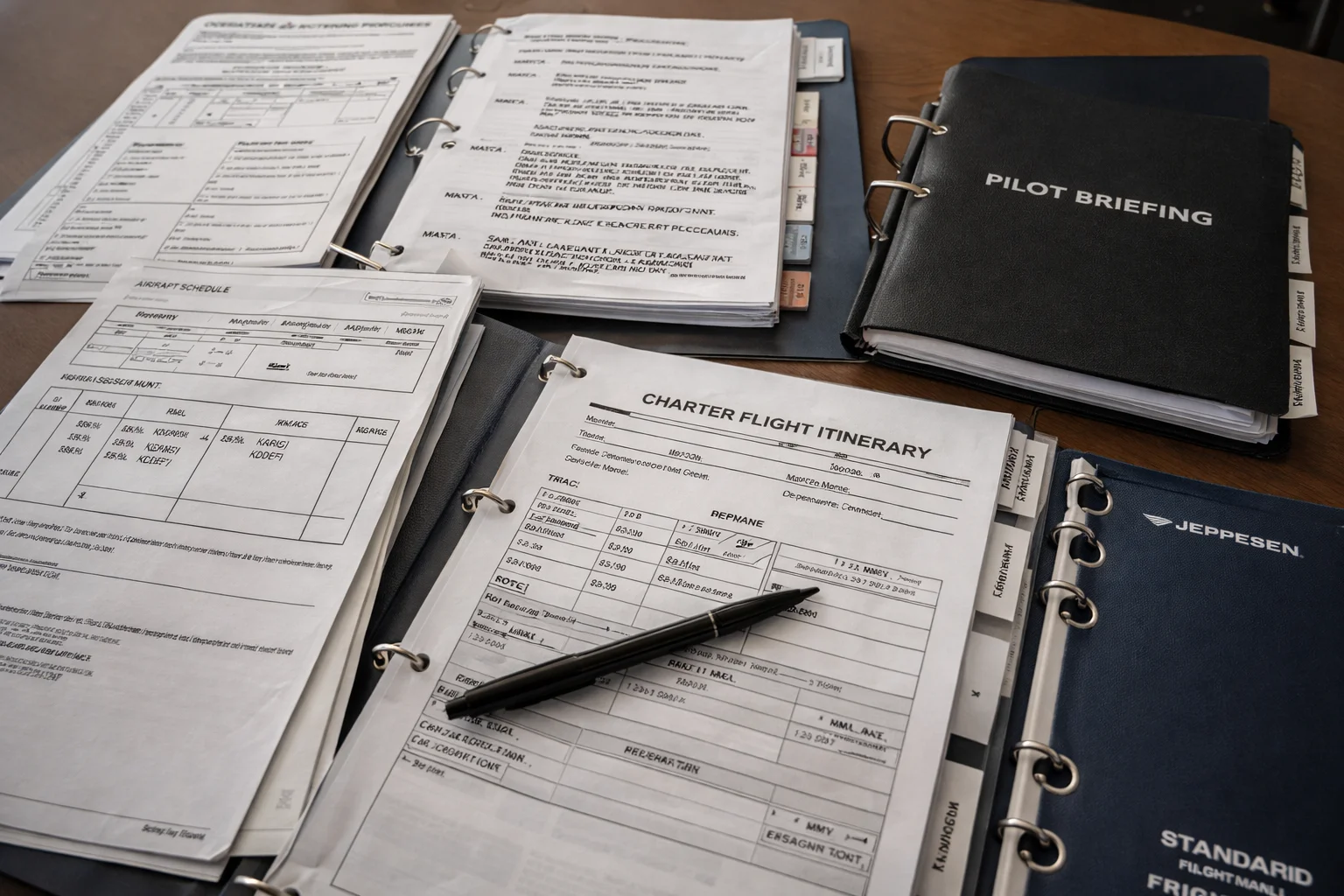
For many passengers, a charter flight can feel straightforward. A company is hired, an aircraft is arranged, a crew appears, and the trip is treated as a private alternative to scheduled airline travel. After a crash, however, the legal picture is often less simple than the outward presentation of the flight suggested. What looked like a single operation to the passenger or family may involve an operator, an aircraft owner, a management company, maintenance providers, and sometimes a broker or medical transport entity, each with a different role in the flight.
That layered structure is one reason charter operator liability deserves separate attention. Many on-demand charter, commuter, and air ambulance operations are conducted under Part 135, a federal regulatory framework distinct from most scheduled Part 121 airline service. After a Part 135 accident, the question is often not just what happened, but who was responsible for what, and under what operational structure the flight was actually conducted.
Liability in charter flight accidents frequently depends on careful analysis of regulatory structure and operational responsibility. Unlike traditional airline operations, Part 135 charter flights may involve multiple entities, including certificate holders, aircraft owners, management companies, maintenance providers, and brokers. Determining which party exercised operational control over the flight is frequently an important part of evaluating potential claims and defenses.
Questions surrounding operational control are addressed in greater depth in the firm’s discussion of Operational Control in Private, Charter, and Managed Aircraft Flights, which examines how federal aviation regulations, contractual arrangements, and real-world flight operations interact in complex accident litigation.
Charter liability issues may also arise in specialized segments of the industry, including emergency medical transport operations. These flights may be conducted under unique operational pressures and regulatory structures that can affect both accident-causation analysis and the allocation of responsibility among aviation entities.
For a broader overview of how charter accident claims proceed within federal and state court systems — including jurisdictional considerations, evidentiary development, and litigation strategy — in many cases the legal analysis focuses on the operational structure of the flight rather than branding alone.
Charter Operator Liability Summary
| Topic | Charter Operator Liability and Part 135 Accident Claims |
|---|---|
| Primary Focus | How liability issues may arise in aviation accidents involving on-demand charter, commuter, and related Part 135 operations |
| Why It Matters | Charter flights often involve multiple entities whose respective operational, ownership, maintenance, and contractual roles may not be obvious from the outside |
| Operational Setting | Part 135 governs many commuter, on-demand, cargo, and air ambulance operations, distinct from most scheduled Part 121 airline service |
| Common Questions | Who operated the flight, who controlled the aircraft and crew, what standards governed the operation, and what entities may bear responsibility after the accident |
| Evidence Often Involved | Operator records, manuals, training records, scheduling information, maintenance records, contracts, operational communications, and aircraft documentation |
| Related Liability Issues | Operator oversight, pilot qualifications, flight and duty concerns, maintenance responsibility, aircraft ownership and management relationships, and product-related issues |
| Related Topics | NTSB investigations, evidence preservation, private and corporate aircraft accident litigation, aircraft maintenance liability |
| Page Type | Evergreen aviation law and investigation resource |
Why Charter Cases Can Be Harder To Untangle
In a scheduled airline crash, the operator is usually apparent from the ticket, the branding, and the structure of the flight itself. Charter cases are often different. A passenger may book through one company, board an aircraft owned by another entity, and fly under the authority of a Part 135 certificate held by yet another operator. In business aviation and air ambulance settings, that structure can become even less obvious to the people most affected by the event.
That matters because legal responsibility does not necessarily track the name most visible to the customer. After a crash, one of the early tasks may be identifying which entity actually conducted the flight, which entity exercised operational control, who supplied the aircraft and crew, and what other parties may have had responsibility for maintenance, dispatch, scheduling, or safety-related oversight. In that respect, charter cases often present a more layered factual problem than the flight looked to be before departure.
What Part 135 Means in Practical Terms
Part 135 is a federal regulatory framework governing many commuter and on-demand air carrier operations. Its requirements address matters such as aircraft, crewmembers, operations, maintenance, and duty-and-rest limitations. For a reader outside aviation, the important point is not memorizing the regulation. It is understanding that a Part 135 flight is not simply a “private flight” in the everyday sense. It may be a commercial operation subject to a specific operating certificate and a distinct set of regulatory duties, and those duties can become important when the accident investigation and later legal analysis begin.
Who the Passenger Thought They Were Flying With
One of the more human features of charter litigation is that passengers and families may not know, at least initially, which entity or entities held the relevant operational responsibilities for the flight. They may know the broker who arranged the trip, the brand name presented in communications, or the owner of the aircraft, but not the precise certificate holder or the entity exercising operational control. In an air ambulance setting, families may understandably focus on the medical urgency of the transport rather than the underlying business and operational structure.
That gap between appearance and reality can matter. It affects how the flight is understood, how records are traced, and how responsibility is evaluated. It is also one reason why these cases often require careful work with operational documents, contracts, maintenance history, and training or crew-related materials rather than quick assumptions based on the outward presentation of the flight.
Common Liability Questions in Part 135 Accident Claims
Part 135 cases can raise a number of recurring liability questions. Depending on the facts, issues may include operational control, pilot qualification or training, crew scheduling, compliance with duty-and-rest requirements, dispatch-related decisions, weather-related judgment, maintenance oversight, and the condition of the aircraft itself. These questions do not always point to a single defendant or a single theory.
In some accidents, the relevant focus may be on how the operator conducted the flight. In others, the more important question may be whether maintenance work, aircraft condition, or component history contributed to the event. That is one reason charter cases may overlap with maintenance-related and, in appropriate matters, product-related theories as well.
Operational Control Often Matters More Than Branding
One of the reasons charter cases deserve separate treatment is that branding and legal responsibility may not align. A flight may be marketed or arranged in one way and conducted in another. That reflects a practical reality of the industry: the operator holding the certificate may be an important part of the legal analysis, though not necessarily the only one.
In litigation terms, that means the focus often turns to the entity that actually operated the flight, the aircraft used, the crew involved, and the operator’s policies, manuals, and records. A passenger may have experienced the trip as a single service. The legal analysis may show something more segmented underneath.
Operational Structure and Litigation Strategy in Charter Accident Cases
In many Part 135 accident cases, the legal analysis extends beyond the immediate sequence of events that led to the crash. Determining how the flight was structured operationally can be just as important as determining why the accident occurred. Questions involving operational authority, crew assignment, dispatch responsibility, maintenance control, and contractual allocation of duties often shape the litigation pathway from the earliest stages of a claim.
The concept of operational control is frequently central to that analysis. In practice, operational control is usually evaluated functionally rather than by branding or marketing presentation alone. As a result, the entity passengers believed they were flying with may not be the entity that exercised authority over the flight. Establishing that distinction can affect party identification and may also influence jurisdictional and forum-related strategy.
These issues can be especially important in medical transport operations. Air ambulance flights may be conducted under time pressure, in challenging weather, or with complex coordination between aviation providers and healthcare organizations.
From a broader litigation perspective, charter accident claims often illustrate how aviation cases move through federal and state courts after the investigative phase concludes. Regulatory compliance issues, aircraft certification and maintenance questions, crew qualification concerns, and operational decision-making may all become subjects of discovery and expert analysis. Those issues may inform the liability analysis, but regulatory structure and operational-control evidence do not by themselves dictate the legal result.
Records and Relationships Can Be as Important as the Wreckage
Like other aviation cases, charter accident claims often depend on much more than the wreckage alone. The factual record may develop both at the scene and through later review of records, maintenance materials, flight logs, and witness information. In charter cases, that broader record review may be especially important because the structure of the flight itself can be part of the case.
Important materials may include operator manuals, training records, scheduling records, maintenance files, aircraft ownership and management documents, communications concerning the flight, and agreements that help explain who was performing which role. If the documentary structure of the flight is part of the liability picture, preserving those materials matters early.
The NTSB Investigation and Civil Claims Are Not the Same Thing
The NTSB may involve technically qualified parties in its investigation, but that process is part of a safety investigation rather than a civil damages proceeding. That distinction can matter in charter cases because the entities involved may be numerous and their roles may overlap factually while diverging legally.
The NTSB investigation may help develop the technical record, but civil claims may still require separate analysis of operator responsibility, contractual structure, maintenance relationships, and other issues not resolved simply by identifying the probable cause of the accident. The firm discusses that broader relationship in How NTSB Investigations Affect Civil Aviation Claims.
Why These Cases Often Feel More Personal
Charter and air ambulance accidents often land differently for the people involved because the flights themselves tend to be more personal. The passengers may be family members, patients, executives, sports teams, or small groups traveling for a specific purpose rather than members of the general flying public. After an accident, the investigation can therefore involve not only technical questions but also immediate confusion about what company arranged the flight, what company operated it, and how the underlying structure actually worked.
That personal dimension does not change the legal standards, but it does help explain why charter cases often require particularly careful factual development. The flight may have seemed simple. The legal and operational structure behind it may be anything but.
Aviation Accident Litigation
Charter operator liability and Part 135 accident claims often turn on more than the immediate cause sequence alone. They may require careful attention to who held the operating authority, who exercised operational control, how the aircraft and crew were provided, what records and relationships governed the flight, and whether maintenance, training, scheduling, or oversight issues also played a role. In that sense, a charter crash can be both highly personal in its impact and unusually layered in its legal structure.
Consultation Regarding Aviation Accident Investigations
Families, referring attorneys, and journalists sometimes seek legal consultation or technical insight regarding aviation accidents and investigative issues discussed in these analyses. Inquiries may be directed to Katzman, Lampert & Stoll at the link below.
Aviation Accident Litigation
- Aviation Accident Litigation
- Private and Corporate Aircraft Accident Litigation
- Military & Government Contractor Aviation Litigation
- Complex Aviation Litigation Methodology
- NTSB Investigations & Civil Aviation Claims
- Federal Preemption in Aviation Product Liability
- Defeating GARA Defenses in Aviation Product Liability Litigation
- For Families and Survivors
MICHIGAN OFFICE
Katzman Lampert & Stoll
950 West University Dr #101
Rochester, MI 48307
E-mail: Click to use our Contact Form
Toll-Free: (866) 309-6097
Phone: (248) 258-4800
Fax: (248) 258-2825
COLORADO OFFICE
Katzman Lampert & Stoll
9596 Metro Airport Ave.
Broomfield, CO 80021
E-mail: Click to use our Contact Form
Toll-Free: (866) 309-6097
Phone: (303) 465-3663
Fax: (303) 867-1565
PENNSYLVANIA OFFICE
Katzman Lampert & Stoll
121 N. Wayne Ave. # 205
Wayne, PA 19087
E-mail: Click to use our Contact Form
Toll-Free: (866) 309-6097
Phone: (610) 686-9686
Fax: (610) 686-9687