
Crashworthiness and Survivability in Aviation Litigation
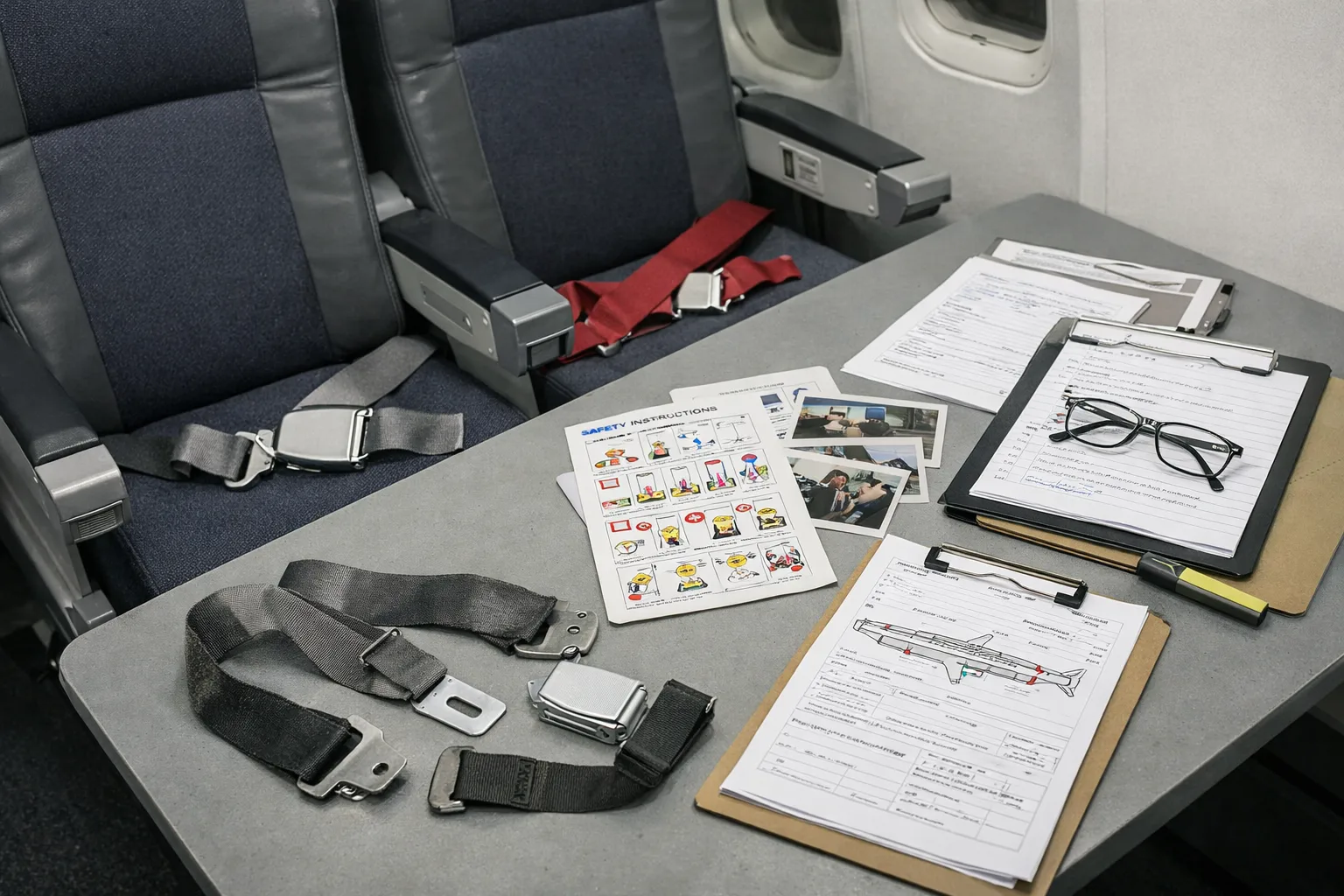
Some aviation cases do not turn only on why the aircraft came down. They also turn on what happened to the people inside once the accident sequence began. In a survivable or partly survivable crash, the legal analysis may extend beyond narrow accident causation and into a different set of questions: whether the aircraft, cabin, seats, restraints, exits, or post-impact environment materially affected the occupants’ ability to survive the event and escape it.
That is what gives crashworthiness and survivability their place in aviation litigation. These cases often carry a particular human weight because they ask not only whether an accident occurred, but whether its consequences were made worse by the way occupants were protected, injured, trapped, or exposed after impact. Put differently, the central issue may become whether the accident was survivable in whole or in part, and whether design, equipment, interior configuration, fire, restraint systems, or evacuation conditions affected that outcome.
Crashworthiness and Survivability Summary
| Topic | Crashworthiness and Survivability in Aviation Litigation |
|---|---|
| Primary Focus | How occupant protection, restraint systems, cabin conditions, post-impact fire, and evacuation-related factors may affect injury severity and survival after an aviation accident |
| Why It Matters | An accident may be survivable in whole or in part, and litigation may examine whether the aircraft and its interior materially affected occupants’ ability to avoid serious injury and escape |
| Common Issues | Seat and restraint performance, occupant flail injuries, cabin interior hazards, fuel-fed fire, emergency egress, and the condition of the cabin after impact |
| Evidence Often Involved | Seat and restraint components, cabin interior materials, wreckage documentation, burn patterns, survival factors analysis, medical evidence, and evacuation-related records |
| Investigation Context | NTSB survival factors investigators examine occupant protection, emergency response, and post-crash survivability issues in appropriate cases |
| Legal Context | Crashworthiness issues may overlap with product liability, maintenance questions, operator-related issues, and the broader factual investigation of the accident |
| Related Topics | NTSB investigations, evidence preservation, aviation product liability, aircraft maintenance liability |
| Page Type | Evergreen aviation law and investigation resource |
Why These Cases Feel Different
Crashworthiness cases often feel different from other aviation claims because the focus is not limited to the initial event. A hard landing, runway excursion, ditching, breakup, rollover, or impact sequence may be only part of the story. The next questions can be just as important: did the seats and restraints perform as intended, did occupants strike injurious structures, did the cabin remain reasonably survivable, was there a post-impact fire, and could people get out?
Those questions matter because serious injury and loss of life do not always follow directly and inevitably from the first mechanical or operational failure. Sometimes the event is survivable at the moment of impact but becomes less survivable because of what follows inside the aircraft. That possibility is what makes crashworthiness and survivability distinct from a simple cause-of-crash analysis.
What “Crashworthiness” Means in Practical Terms
In practical terms, crashworthiness concerns how the aircraft and its interior protect occupants during an emergency landing or crash sequence. Federal airworthiness standards may address emergency-landing conditions and occupant-protection requirements in relevant categories of aircraft. FAA materials may also distinguish occupant-protection and cabin-safety issues from the broader question of whether an aircraft is airworthy for operation. In broad terms, airworthiness and crashworthiness address different concerns: one focuses on safe operation, while the other focuses on occupant protection if an accident sequence occurs.
That distinction matters in litigation, but it should not be treated as a complete legal rule. A case may involve an aircraft that was capable of flight and yet still raise serious questions about how the cabin, seats, restraints, exits, or post-impact environment performed once the accident occurred. In that sense, crashworthiness focuses less on keeping the aircraft in the air and more on what protections existed when things went wrong.
Survivability Is Not an Abstract Question
“Survivability” can sound clinical, but in aviation litigation it is often a very human question. It asks whether people who were alive after the initial impact may have had a realistic opportunity to remain alive, avoid catastrophic injury, or escape the aircraft. That inquiry can involve restraint performance, head impact protection, cabin intrusion, smoke and fire conditions, emergency exits, and the time available for evacuation.
It can also force a difficult but important distinction. The fact that an aircraft crashed does not always answer whether the injuries that followed were inevitable. In some cases, the impact itself may have been survivable while the interior conditions afterward were not. That is often where survivability analysis becomes central.
Common Crashworthiness Issues in Aviation Litigation
The facts vary from case to case, but several recurring issues appear in crashworthiness litigation. These may include whether seats remained attached and performed properly, whether restraint systems reduced or failed to reduce occupant motion, whether occupants struck injurious interior structures, whether the cabin retained survivable space, and whether post-impact fire, smoke, or toxic conditions worsened the outcome.
Emergency egress can also matter. The ability to locate, access, and use exits in a damaged or smoke-filled cabin may become part of the case, especially where the accident was initially survivable. A survivability-focused claim therefore often extends beyond the first impact and into the minutes that followed it.
Seats, Restraints, and Occupant Protection
One of the most concrete areas in these cases involves seats and restraint systems. Occupant-protection standards exist for obvious reasons: in a severe but survivable impact, the way the body moves inside the aircraft can shape the difference between survivable injury and catastrophic injury. The performance of seat structures, restraint hardware, and surrounding interior surfaces may all become important. This also includes questions of design, manufacturing, and warning issues.
In litigation, however, the existence of a certification standard may not end the inquiry. The practical questions are often more specific: what happened to the seat, what happened to the restraint, what object did the occupant strike, how did the cabin deform, and whether those conditions increased the severity of otherwise survivable injuries.
Post-Impact Fire and Escape Conditions
Some of the hardest aviation cases involve survivable impacts followed by fire, smoke, or failed evacuation. This is one reason crashworthiness litigation often extends beyond the first point of impact. A case may require attention not only to whether the aircraft could be controlled before impact, but also to whether occupants were protected afterward and whether the cabin environment allowed escape before conditions became unsurvivable.
Where post-impact fire is involved, the legal and factual analysis may include cabin materials, fire progression, burn patterns, smoke conditions, emergency exit access, and the time available for occupants to evacuate. These are not peripheral details. In the right case, they may be central to understanding why injuries or fatalities occurred as they did.
How These Cases Intersect With Other Liability Theories
Crashworthiness issues often arise as part of a larger case rather than as the only disputed issue. Product-related issues may be central where cabin components, seats, restraints, interior materials, fuel systems, or other design features are involved. Maintenance issues may also matter if installed components, restraint systems, seat tracks, or cabin equipment were not maintained or repaired correctly. For that reason, crashworthiness questions can overlap with aircraft maintenance liability in aviation accident cases.
These cases may also connect to the broader federal investigation. The technical cause of the accident and the survival factors analysis do not always answer the same question. One may address why the accident happened. The other may address why the injuries were as severe as they were. Related evidence may inform the liability analysis, but survival-factors evidence, certification history, and post-impact conditions do not by themselves dictate the legal result.
Records, Wreckage, and Human Evidence
Crashworthiness cases often depend on a different mix of proof than a purely operational accident analysis. Physical evidence can include seats, restraints, interior structures, burned or deformed cabin materials, emergency exits, and wreckage patterns showing how the cabin behaved. Medical evidence, injury patterns, burn evidence, witness accounts, and evacuation evidence may also become important in understanding what was survivable and what was not.
In a survivability-focused case, the loss of interior components, restraint hardware, burn-pattern evidence, or evacuation-related information can make later analysis substantially more difficult.
Why the Human Dimension Matters
These cases are technical, but they are never only technical. Crashworthiness and survivability litigation often centers on a painful question: whether the people on board had a better chance than the outcome suggests. Families may come to understand that the central issue is not simply why the aircraft crashed, but whether a loved one survived the impact and then faced conditions inside the aircraft that made escape impossible or injuries unsurvivable.
That does not reduce the case to emotion. It clarifies the legal inquiry. The point is to understand whether the aircraft’s design, interior protection, restraint systems, fire conditions, or evacuation environment changed the consequences of the accident for the people inside it.
Aviation Accident Litigation
Crashworthiness and survivability in aviation litigation concern the protection of occupants during and after an accident sequence. In an appropriate case, the central issue may not be limited to what caused the crash, but may also include whether seats, restraints, cabin structures, fire conditions, and escape conditions materially affected the occupants’ ability to avoid serious injury and survive. That is why these claims often require close attention to survival factors evidence, interior components, and the human realities of what occurred inside the aircraft after impact.
Consultation Regarding Aviation Accident Investigations
Families, referring attorneys, and journalists sometimes seek legal consultation or technical insight regarding aviation accidents and investigative issues discussed in these analyses. Inquiries may be directed to Katzman, Lampert & Stoll at the link below.
Aviation Accident Litigation
- Aviation Accident Litigation
- Private and Corporate Aircraft Accident Litigation
- Military & Government Contractor Aviation Litigation
- Complex Aviation Litigation Methodology
- NTSB Investigations & Civil Aviation Claims
- Federal Preemption in Aviation Product Liability
- Defeating GARA Defenses in Aviation Product Liability Litigation
- For Families and Survivors
MICHIGAN OFFICE
Katzman Lampert & Stoll
950 West University Dr #101
Rochester, MI 48307
E-mail: Click to use our Contact Form
Toll-Free: (866) 309-6097
Phone: (248) 258-4800
Fax: (248) 258-2825
COLORADO OFFICE
Katzman Lampert & Stoll
9596 Metro Airport Ave.
Broomfield, CO 80021
E-mail: Click to use our Contact Form
Toll-Free: (866) 309-6097
Phone: (303) 465-3663
Fax: (303) 867-1565
PENNSYLVANIA OFFICE
Katzman Lampert & Stoll
121 N. Wayne Ave. # 205
Wayne, PA 19087
E-mail: Click to use our Contact Form
Toll-Free: (866) 309-6097
Phone: (610) 686-9686
Fax: (610) 686-9687