
United 737 Collides With Deice Trucks During Taxi at Denver
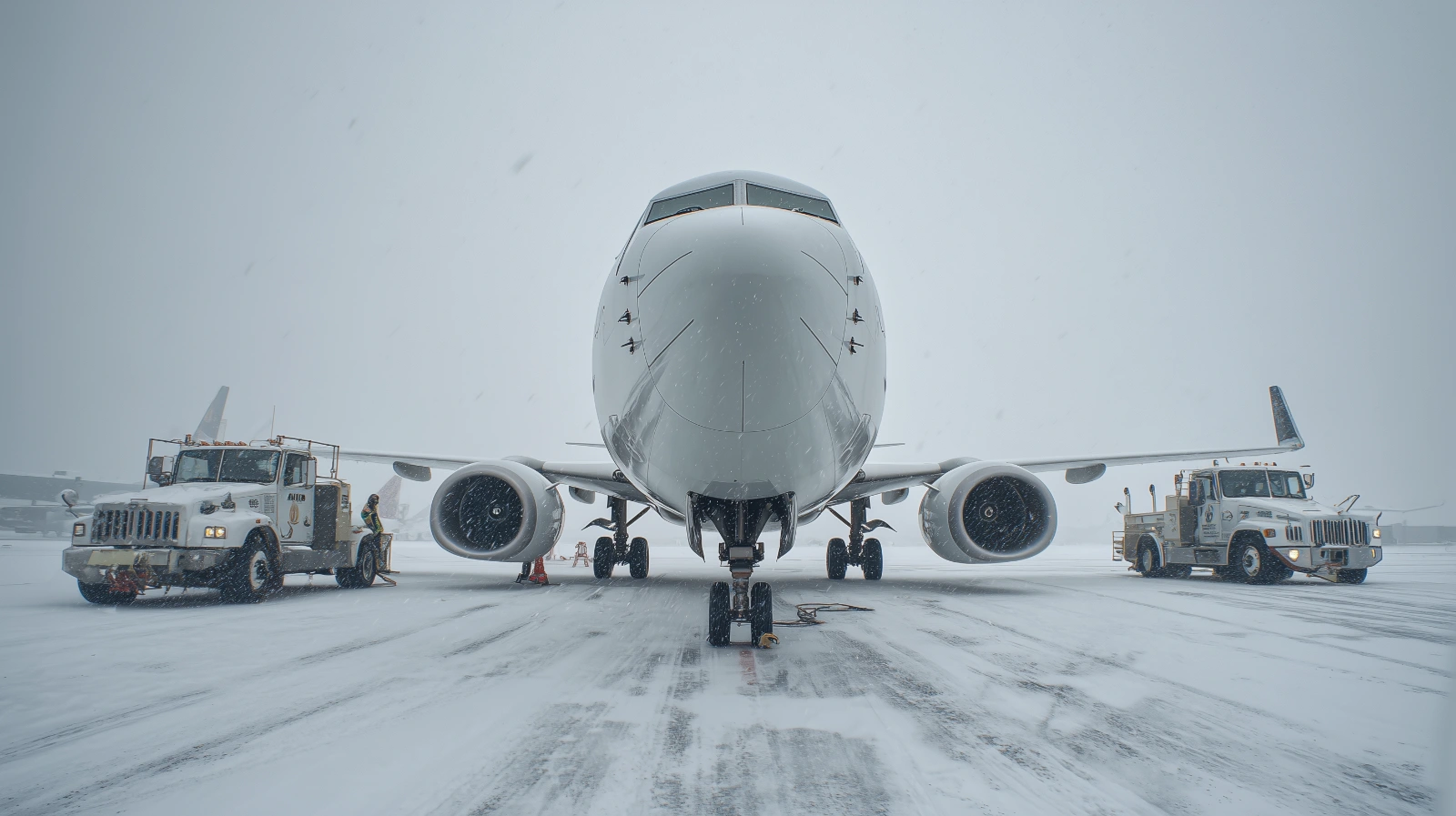
A Boeing 737-824 was involved in a ground collision at Denver, Colorado, on March 6, 2026. The aircraft began taxiing from a deicing pad and struck two deice trucks positioned near the wings. Federal investigators are examining the event with particular focus on post-deicing clearance procedures and flight crew communication sequencing.
Accident Summary
| Date | March 6, 2026 |
|---|---|
| Location | Denver, Colorado, United States |
| Aircraft | Boeing 737-824, N27213 |
| Operation | Part 121 scheduled passenger flight, Denver (DEN) to Nashville (BNA) |
| Occupants | 136 total (130 passengers; 6 crew) |
| Fatalities | 0 |
| Phase of Flight | Ground operations (taxi from deice pad) |
| Investigation | NTSB with FAA participation |
What Happened
United Airlines flight 605 was positioned at deice pad C, spot C5, at Denver International Airport under instrument meteorological conditions, including a reported visibility of 0.5 miles and an overcast ceiling at 500 feet AGL. The aircraft was undergoing deicing using Type IV fluid applied by four trucks positioned forward and aft of the wings.
According to flight crew statements, a post-deicing communication was heard while the crew was engaged in conversation. The first officer acknowledged the message and read back details indicating that vehicles were behind clearance lines, although the captain later stated uncertainty about whether the clearance applied to their aircraft. After completing post-deicing checks and receiving taxi clearance from air traffic control, the aircraft began moving forward.
Shortly after initiating taxi, the aircraft collided with two deice trucks, identified as MAG 94 and MAG 95, positioned near the wings. The impact pushed one of the trucks onto its side. Deicing personnel reported observing the aircraft begin to move and were unable to stop it before the collision occurred.
Aircraft and Operational Context
The aircraft, a Boeing 737-824 registered N27213, was operating as a Part 121 scheduled domestic passenger flight with 2 pilots, 4 flight attendants, and 130 passengers onboard. The airplane sustained substantial damage, including to the left winglet, multiple slats (numbers 1, 5, 6, 7, and 8), both wing lower skins, and the right aileron, as documented in postaccident images on page 2.
Weather conditions at the time included a temperature of 0°C and dew point of -1°C, consistent with active deicing operations. Winds were light at 7 knots from 010°, and the aircraft was operating under IFR. The airport elevation was reported at 5,404 feet MSL, with the accident site located approximately 1 nautical mile from the weather observation point.
Accident Investigation
The National Transportation Safety Board has initiated a multidisciplinary investigation, including specialists in operations, human performance, airport operations, cockpit voice recorder (CVR), and flight data recorder (FDR) analysis. These efforts follow the standard NTSB investigation process, which integrates operational data, recorded communications, and physical evidence.
Investigators are reviewing the timing and content of the post-deicing communication, including whether it was clearly directed to the flight crew and whether standard phraseology was used. The cockpit voice recorder is expected to provide insight into the crew’s conversation at the time the message was transmitted and acknowledged.
The relative positioning of the deice trucks, particularly MAG 94 near the left wing and MAG 95 near the right wing, is also under review. Investigators are assessing whether the trucks had fully cleared designated safety lines before the aircraft began taxiing, and whether visual or procedural safeguards were in place to prevent premature movement.
Operational and Regulatory Issues
This event centers on coordination between flight crews and ground deicing teams during a high-workload phase of operations. Standard procedures require explicit confirmation that all equipment is clear before aircraft movement, particularly when multiple vehicles are positioned around the wings and tail surfaces.
Communication discipline is a focal point, including whether the post-deicing briefing was properly addressed, acknowledged, and confirmed. The reported cockpit conversation at the time of the transmission raises questions about distraction and task prioritization during critical ground operations.
Airport surface procedures, including the use of clearance lines and visual cues, are also relevant. Investigators will examine whether operational guidance, training, or procedural clarity contributed to the misalignment between perceived and actual clearance status.
Aviation Accident Litigation
Ground collision events involving aircraft and service vehicles often involve complex liability questions across multiple parties, including airlines, ground service providers, and airport operators. These cases typically require detailed reconstruction of communications, procedural compliance, and equipment positioning—issues commonly addressed by aviation accident litigation attorneys handling surface-operation incidents.
Legal analysis may also examine contractual relationships between carriers and ground handling providers, including indemnification clauses and operational control responsibilities.
Consultation Regarding Aviation Accident Investigations
Families, referring attorneys, and journalists sometimes seek legal consultation or technical insight regarding aviation accidents and investigative issues discussed in these analyses. Inquiries may be directed to Katzman, Lampert & Stoll at the link below.
Aviation Accident Litigation
- Aviation Accident Litigation
- Commercial Airline Accident Litigation
- Private and Corporate Aircraft Accident Litigation
- Military & Government Contractor Aviation Litigation
- Complex Aviation Litigation Methodology
- NTSB Investigations & Civil Aviation Claims
- Federal Preemption in Aviation Product Liability
- Defeating GARA Defenses in Aviation Product Liability Litigation
- For Families and Survivors
MICHIGAN OFFICE
Katzman Lampert & Stoll
950 West University Dr #101
Rochester, MI 48307
E-mail: Click to use our Contact Form
Toll-Free: (866) 309-6097
Phone: (248) 258-4800
Fax: (248) 258-2825
COLORADO OFFICE
Katzman Lampert & Stoll
9596 Metro Airport Ave.
Broomfield, CO 80021
E-mail: Click to use our Contact Form
Toll-Free: (866) 309-6097
Phone: (303) 465-3663
Fax: (303) 867-1565
PENNSYLVANIA OFFICE
Katzman Lampert & Stoll
121 N. Wayne Ave. # 205
Wayne, PA 19087
E-mail: Click to use our Contact Form
Toll-Free: (866) 309-6097
Phone: (610) 686-9686
Fax: (610) 686-9687