

United Flight 6517 Returns to Tucson After Cockpit Smoke
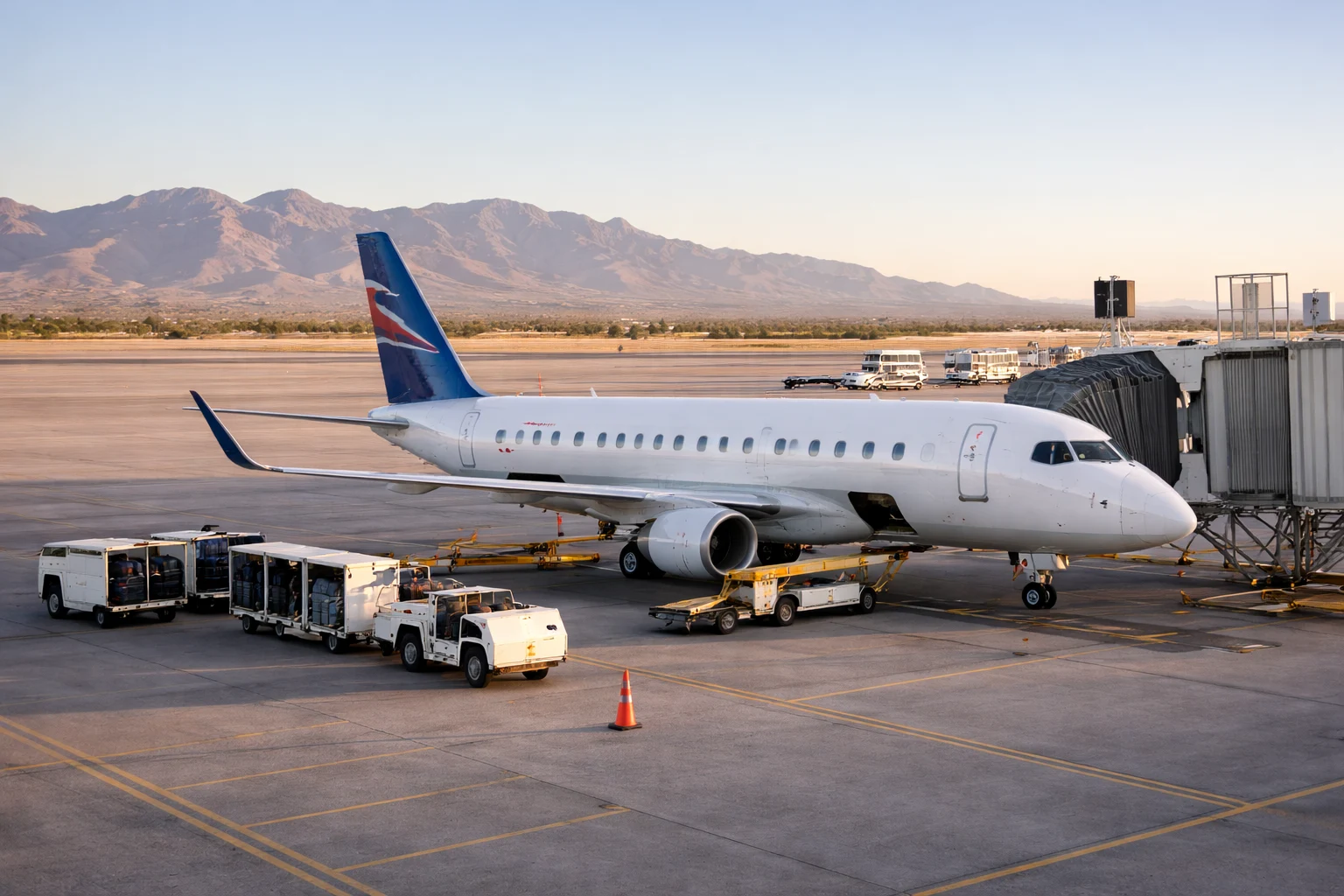
On February 7, 2016, United Airlines Flight 6517 returned to Tucson International Airport in Tucson, Arizona shortly after departure for Los Angeles after smoke filled the cockpit and cabin. Airport officials reported the flight departed at about 6:00 a.m. with 77 passengers onboard and landed back in Tucson without a reported in-flight fire. Federal authorities are investigating the source of the smoke and the operational circumstances of the emergency return and evacuation.
Accident Summary
| Date | February 7, 2016 |
|---|---|
| Location | Tucson, Arizona, USA |
| Aircraft | Not publicly reported (United Flight 6517) |
| Operation | Part 121; air carrier – scheduled; Tucson, AZ (TUS) to Los Angeles, CA (LAX) (reported) |
| Occupants | Not publicly reported (77 passengers reported) |
| Fatalities | 0 |
| Phase of Flight | Climb (shortly after departure; returned to land) |
| Investigation | Authorities investigating (specific agency not publicly reported) |
What Happened
According to a Tucson Airport Authority spokesperson, United Flight 6517 took off from Tucson for Los Angeles around 6:00 a.m., and smoke subsequently filled the cockpit and cabin while the airplane was airborne. The pilot turned the airplane back to Tucson for an emergency landing. The spokesperson stated the smoke originated from the cockpit and that there was no fire.
After landing, the airplane was evacuated on the runway. Passengers described the evacuation as hectic, and one passenger reported that some occupants exited over the wings and had to jump down to the ground. Airport officials stated the airplane later taxied back to the gate under its own power.
Aircraft and Operational Context
The publicly reported information identifies the flight as United Flight 6517 operating from Tucson to Los Angeles with 77 passengers onboard. The aircraft type, the number of crewmembers, and any technical details about the systems involved were not publicly reported in the provided source. No specific injuries or hospitalizations were confirmed in the provided source.
Events involving smoke or fumes can involve a wide range of sources, including air conditioning and bleed-air systems, electrical components, avionics bays, galleys, or other equipment. Without an official technical release, the source of the smoke should be treated as not publicly reported. Investigators typically assess how quickly the condition developed, what procedures were used, and how the crew coordinated with ATC and airport response resources.
Accident Investigation
Even when an event does not generate a public NTSB docket, incidents involving cockpit or cabin smoke are commonly reviewed through a structured fact-gathering process that includes crew statements, maintenance inspection findings, and operational records, consistent with the stages described in our overview of the NTSB investigation process. For this event, the airport spokesperson stated that authorities were investigating the cause of the smoke. Any additional verified detail would typically come from official agency or operator statements or maintenance findings released after inspection.
Investigators often evaluate the timeline from first indication to return, the decision-making around diversion versus continuation, and the post-landing sequence, including evacuation initiation and passenger egress pathways. They may also review cabin conditions reported by passengers, such as visibility and breathing difficulty, and correlate those reports with any mechanical findings developed after the airplane is inspected. The specific investigative agency and findings were not publicly reported in the provided source.
Operational and Regulatory Issues
Cockpit smoke or fumes are treated as time-sensitive because they can impair crew performance and can indicate an underlying electrical or mechanical problem. Standard operational considerations often include the speed of identifying the source, the use of checklists, the selection of the nearest suitable airport, and coordination for emergency response and evacuation. In this event, the airplane returned to Tucson and passengers were evacuated on the runway, with the airplane later taxiing to the gate under its own power as reported by airport officials.
Evacuations can also create secondary injury risk, particularly when passengers exit over-wing locations or jump down to the ground. The reported accounts that some passengers exited over the wings and had to jump underscore why investigators often review the evacuation flow, the availability and use of exit ramps, and passenger compliance and cabin-crew direction. The number of injuries, if any, associated with the evacuation was not publicly reported in the provided source.
Aviation Accident Litigation
Separate from any safety review, civil claims arising from a smoke-and-evacuation event typically focus on the specific equipment condition, maintenance history, and the operational response, as discussed in our overview of aviation accident litigation. Claims analysis often depends on what post-event inspections show and whether the documented response aligned with applicable procedures and training. The available public reporting for this incident does not identify a confirmed technical source of the smoke.
Depending on the facts developed, aviation matters involving onboard smoke can require review of maintenance records, component replacement history, and inspection findings. Where passengers report breathing difficulty or evacuation-related harm, medical causation and event timing can become central to damages analysis. Those issues cannot be evaluated reliably without confirmed injury documentation and technical findings.
Where aviation cases resolve, outcomes often turn on the completeness of the technical record and individualized proof of injury and causation. Broader context on how aviation civil outcomes can vary by event type and injury severity may depend on facts not yet publicly reported for this incident.
Consultation Regarding Aviation Accident Investigations
Families, referring attorneys, and journalists sometimes seek legal consultation or technical insight regarding aviation accidents and investigative issues discussed in these analyses. Inquiries may be directed to Katzman, Lampert & Stoll at the link below.
Aviation Accident Litigation
- Aviation Accident Litigation
- Private and Corporate Aircraft Accident Litigation
- Military & Government Contractor Aviation Litigation
- Complex Aviation Litigation Methodology
- NTSB Investigations & Civil Aviation Claims
- Federal Preemption in Aviation Product Liability
- Defeating GARA Defenses in Aviation Product Liability Litigation
- For Families and Survivors
MICHIGAN OFFICE
Katzman Lampert & Stoll
950 West University Dr #101
Rochester, MI 48307
E-mail: Click to use our Contact Form
Toll-Free: (866) 309-6097
Phone: (248) 258-4800
Fax: (248) 258-2825
COLORADO OFFICE
Katzman Lampert & Stoll
9596 Metro Airport Ave.
Broomfield, CO 80021
E-mail: Click to use our Contact Form
Toll-Free: (866) 309-6097
Phone: (303) 465-3663
Fax: (303) 867-1565
PENNSYLVANIA OFFICE
Katzman Lampert & Stoll
121 N. Wayne Ave. # 205
Wayne, PA 19087
E-mail: Click to use our Contact Form
Toll-Free: (866) 309-6097
Phone: (610) 686-9686
Fax: (610) 686-9687