

Who Is Liable in an Aviation Accident: Assigning Liability
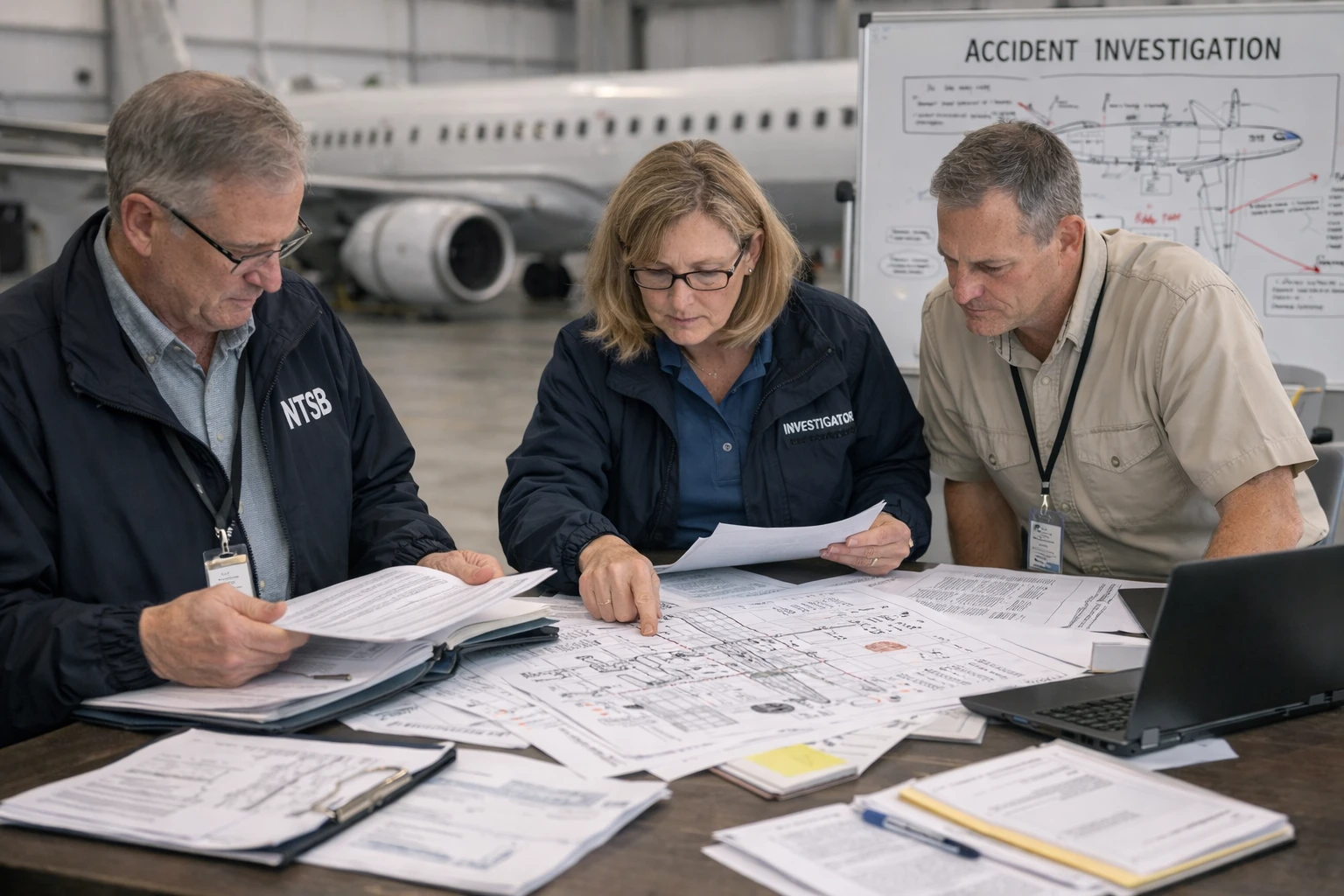
When an aviation accident occurs, one of the first questions asked by families, investigators, and journalists alike is simple: who is responsible?
In aviation accidents, the answer is rarely straightforward. Determining liability often requires a detailed investigation involving aircraft systems, maintenance records, operational decisions, regulatory compliance, and sometimes the conduct of multiple parties. Airlines, aircraft manufacturers, maintenance providers, and even third parties may all play a role in the chain of events leading to an accident.
Federal investigators examine accidents to determine the technical causes and contributing factors. Civil litigation then examines a separate question: whether the conduct of any party created legal responsibility for injuries or loss of life. An overview of the investigative process itself can be found in How the NTSB Investigates an Aircraft Accident.
Why Liability in Aviation Accidents Is Often Complex
Aviation systems involve multiple layers of responsibility. Aircraft are designed by manufacturers, maintained by airlines or service providers, operated by trained crews, and regulated by federal authorities. Because of this interconnected system, accidents frequently involve a combination of technical, operational, and human factors.
For that reason, liability analysis typically examines several major categories of potential contributing factors.
Operational Factors
Pilot decision-making, crew coordination, and operational procedures often play a role in aviation accidents. Investigators may analyze whether flight crews followed established procedures, responded appropriately to changing conditions, or were confronted with unexpected system failures.
Operational issues can include weather avoidance decisions, navigation during instrument conditions, fuel management, or crew resource management inside the cockpit. In many cases, investigators examine the broader operational environment rather than focusing solely on the actions of a single pilot.
That inquiry can develop in practice around issues such as fuel planning, selector positions, tank status, and the absence of pilot logbooks or maintenance records rather than a confirmed preimpact mechanical malfunction.
Aircraft Design and Manufacturing
Aircraft manufacturers have a legal obligation to design and produce aircraft and component systems that are reasonably safe for their intended use. When an accident involves a design flaw, defective component, or inadequate warnings to operators, the manufacturer may face product liability claims.
Design defect litigation in aviation often requires extensive analysis of certification submissions, engineering documents, and internal communications concerning known safety risks. In some cases, the adequacy of the aircraft’s certification process itself becomes part of the legal dispute.
Maintenance and Mechanical Issues
Aircraft must be maintained according to strict regulatory standards. Maintenance errors, improper repairs, or failure to comply with service bulletins and airworthiness directives can contribute to accidents.
Liability analysis frequently involves examination of maintenance logs, inspection records, and component service histories. Responsibility may fall on airlines, independent maintenance providers, or component manufacturers depending on the circumstances.
Airline Operational Responsibilities
Airlines have broad operational duties that extend beyond the actions of a single flight crew. These responsibilities include aircraft maintenance oversight, crew training programs, safety management systems, and compliance with federal aviation regulations.
If an airline fails to maintain aircraft properly, inadequately trains flight crews, or does not follow required operational procedures, those failures may become central issues in aviation accident litigation.
Role of Federal Regulations
Aviation safety in the United States operates within an extensive federal regulatory framework administered primarily by the Federal Aviation Administration (FAA). Aircraft certification, maintenance requirements, and operational rules are all governed by federal regulations.
These regulations often become central to aviation accident cases. Litigation may examine whether the parties involved complied with applicable regulations and whether regulatory approval shields manufacturers or operators from certain claims.
Insurance and Financial Responsibility
Commercial airlines, aircraft manufacturers, and aviation service providers typically carry substantial liability insurance coverage. These insurance policies are designed to respond when accidents cause injury or loss of life.
However, large aviation accidents can involve damages that exceed a single policy’s limits. In those situations, multiple insurance layers or additional responsible parties may become part of the litigation.
Why Multiple Parties Are Often Involved
Aviation accidents rarely result from a single failure. Instead, they often reflect a sequence of technical issues, operational decisions, and systemic vulnerabilities. For that reason, aviation litigation frequently involves multiple defendants whose actions are examined together to determine how the accident occurred.
This multi-party structure is one of the defining characteristics of aviation accident litigation and requires careful technical and legal analysis.
Understanding Liability After an Aviation Accident
Determining responsibility after an aviation accident requires detailed investigation, engineering analysis, and legal evaluation. Federal investigators focus on identifying causes and improving safety, while civil litigation examines whether specific parties are legally responsible for injuries or deaths, an issue often evaluated by aviation accident litigation attorneys.
Because modern aviation involves complex technology, layered regulation, and multiple operational actors, assigning liability is rarely simple. Each accident must be examined carefully to determine how design, maintenance, operational decisions, and regulatory compliance interacted in the events leading to the crash.
Consultation Regarding Aviation Accident Investigations
Families, referring attorneys, and journalists sometimes seek legal consultation or technical insight regarding aviation accidents and investigative issues discussed in these analyses. Inquiries may be directed to Katzman, Lampert & Stoll at the link below.
Aviation Accident Litigation
- Aviation Accident Litigation
- Private and Corporate Aircraft Accident Litigation
- Military & Government Contractor Aviation Litigation
- Complex Aviation Litigation Methodology
- NTSB Investigations & Civil Aviation Claims
- Federal Preemption in Aviation Product Liability
- Defeating GARA Defenses in Aviation Product Liability Litigation
- For Families and Survivors
MICHIGAN OFFICE
Katzman Lampert & Stoll
950 West University Dr #101
Rochester, MI 48307
E-mail: Click to use our Contact Form
Toll-Free: (866) 309-6097
Phone: (248) 258-4800
Fax: (248) 258-2825
COLORADO OFFICE
Katzman Lampert & Stoll
9596 Metro Airport Ave.
Broomfield, CO 80021
E-mail: Click to use our Contact Form
Toll-Free: (866) 309-6097
Phone: (303) 465-3663
Fax: (303) 867-1565
PENNSYLVANIA OFFICE
Katzman Lampert & Stoll
121 N. Wayne Ave. # 205
Wayne, PA 19087
E-mail: Click to use our Contact Form
Toll-Free: (866) 309-6097
Phone: (610) 686-9686
Fax: (610) 686-9687