

Sourcing and Citation Policy
Aviation Insights is an educational resource based on publicly available information and generally accepted investigative, regulatory, and legal frameworks. Where an article discusses a specific incident, it relies on publicly reported facts and formally released investigative materials when available.
This section does not speculate about accident cause, assign fault, or assume unverified failure sequences. Early reporting can change as evidence is analyzed; readers should treat preliminary information as subject to revision until investigators issue formal updates and final findings.
Case summaries are provided for general context. They are not legal advice and are not a substitute for reviewing the full text of judicial opinions and applicable statutes or regulations.
Aviation Insights
Introduction
The Aviation Insights section provides neutral, informational analysis regarding aircraft accidents, federal aviation investigations, and aviation litigation frameworks.
This section is designed to explain how aviation investigations proceed, how federal aviation law operates, and how technical findings interact with civil legal proceedings. The material here is based on publicly available information and general investigative and regulatory processes.
It is intended as an educational resource for journalists, researchers, and readers seeking factual context about aviation accident investigations and related legal structures.
What You’ll Find Here
-
Accident Analysis
Timely, factual summaries explaining the investigative process and legal context following aviation accidents. -
Aviation Law & Investigation
Plain-language explanations of federal aviation investigation procedures, litigation frameworks, and the legal issues that often arise after serious aviation events.
How the NTSB Investigates an Aircraft Accident -
Aviation Operations & Regulatory Environment
Analysis of the operational rules, regulatory structures, and oversight frameworks that shape aviation safety, compliance, and liability exposure. -
Aviation Expert Commentary
Media-oriented analysis of major aviation incidents, safety developments, and regulatory issues, written to provide clear legal and operational perspective for journalists, industry readers, and the public. -
Case Law & Precedent
Summaries of significant aviation decisions and legal principles shaping aircraft accident litigation in U.S. courts.
For a categorized record of published federal appellate and reported aviation decisions referenced in these analyses, see the firm’s
Federal Appellate & Reported Aviation Decisions
.
The featured Accident Analysis and Aviation Law & Investigation Insights below provide neutral analysis of aircraft accidents, aviation investigations, and legal issues that frequently arise in aviation litigation. These articles review publicly available information, investigative findings, regulatory frameworks, and technical questions relevant to aviation safety and accident litigation.
Recent entries address both historical aviation cases and current accident investigations involving commercial airlines, corporate aircraft, helicopters, and general aviation operations.
Featured Aviation Accident Analyses

Cessna T210M Crash Near Deerfield, Illinois During PWK Approach
A preliminary NTSB report says a Cessna T210M crashed near Deerfield, Illinois on March 4, 2026 during the RNAV Runway 16 approach to Chicago Executive Airport after repeated low altitude alerts in night instrument conditions.

Kauai MD 500 Helicopter Crash Near Kalalau Beach Under NTSB Investigation
A Hughes/MD 500 air tour helicopter crashed near Kalalau Beach on Kauai’s Na Pali Coast on March 26, 2026, killing three people and injuring two others. Federal investigators are now examining the crash sequence, the operator’s records, and the technical evidence recovered from the remote shoreline site.
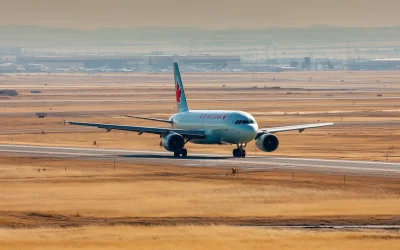
NTSB Final Report on Air Canada BD500 Cabin Smoke Event and Evacuation in Denver
An NTSB final report on Air Canada Flight 1038 found that unidentified burned debris in an aft galley oven generated cabin smoke and odor during climb from Denver, leading to a return, a runway evacuation, and one serious passenger injury.
Featured Aviation Law & Investigation Articles

Runway Incursions and Aviation Litigation
Runway incursions expose critical breakdowns in airport communication, coordination, and surface control. Even without catastrophic injury, these events can reveal systemic safety weaknesses and create substantial litigation issues involving causation, operational procedures, air traffic control, airport design, and evidentiary analysis.

Air Ambulance Liability and Operational Control in Aviation Accident Cases
Air Ambulance Operations and the Aviation Litigation Landscape Air ambulance liability in aviation accident cases turns on the interaction among common-carrier principles, operational control, medical-transport functions, and the layered federal rules governing...

Aviation Product Liability: When Manufacturers May Be Liable
Aviation product liability cases can involve design defects, manufacturing defects, warning failures, and component issues that are not obvious in the immediate aftermath of a crash. This article explains how manufacturer liability may arise and how those claims intersect with crashworthiness, maintenance history, evidence preservation, and the broader accident investigation.
Featured Aviation Operations & Regulatory Environment Articles

Operational Control in Private, Charter, and Managed Aircraft Flights
Operational control is often the decisive issue in cases involving privately operated, chartered, and managed aircraft. This article explains how regulators, investigators, and courts analyze that issue and why it matters in complex aviation litigation.

Evidence Preservation After an Aviation Crash
After an aviation crash, important evidence may exist not only in the wreckage itself, but also in maintenance records, operational records, onboard data, scene documentation, and other materials that can bear on how the event occurred and what entities may have been...

FAA vs NTSB: Who Investigates Aviation Accidents in the United States?
FAA vs. NTSB: Who Does What After an Aviation Accident? When an aviation accident occurs in the United States, two federal agencies quickly become involved: the National Transportation Safety Board (NTSB) and the Federal Aviation Administration (FAA). Their names...
Featured Aviation Expert Commentary Articles

LaGuardia Runway Incursion Expert Commentary
The LaGuardia runway incursion highlights how near-miss events can reveal deeper operational strain, including possible breakdowns in sequencing, clearances, and surface coordination. Even without catastrophic consequences, such incidents may expose serious safety vulnerabilities and raise complex legal questions requiring careful factual investigation.
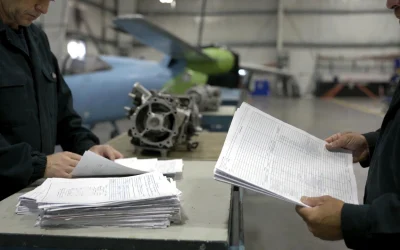
NTSB Party Participant Process Commentary
The NTSB’s party-participant process allows manufacturers to assist in crash investigations involving their own products while victims are excluded. In aviation accident litigation, that imbalance can shape early technical findings and later courtroom narratives, making it critical for courts and juries to understand the distinction.

Mooney Fuel-System Engine Failure Commentary
In Mooney engine-failure investigations, the engine itself may be only part of the story. Integral wing fuel tanks, sealant blockage, and restricted fuel flow can deprive the engine of usable fuel, making a suspected powerplant failure instead a deeper fuel-system and liability issue.
Aviation Accident Litigation
- Aviation Accident Litigation
- Private and Corporate Aircraft Accident Litigation
- Military & Government Contractor Aviation Litigation
- Complex Aviation Litigation Methodology
- NTSB Investigations & Civil Aviation Claims
- Federal Preemption in Aviation Product Liability
- Defeating GARA Defenses in Aviation Product Liability Litigation
- For Families and Survivors
MICHIGAN OFFICE
Katzman Lampert & Stoll
950 West University Dr #101
Rochester, MI 48307
E-mail: Click to use our Contact Form
Toll-Free: (866) 309-6097
Phone: (248) 258-4800
Fax: (248) 258-2825
COLORADO OFFICE
Katzman Lampert & Stoll
9596 Metro Airport Ave.
Broomfield, CO 80021
E-mail: Click to use our Contact Form
Toll-Free: (866) 309-6097
Phone: (303) 465-3663
Fax: (303) 867-1565
PENNSYLVANIA OFFICE
Katzman Lampert & Stoll
121 N. Wayne Ave. # 205
Wayne, PA 19087
E-mail: Click to use our Contact Form
Toll-Free: (866) 309-6097
Phone: (610) 686-9686
Fax: (610) 686-9687