
N544SR Cirrus SR22 Crash – Melbourne, FL (2012) Investigation Overview
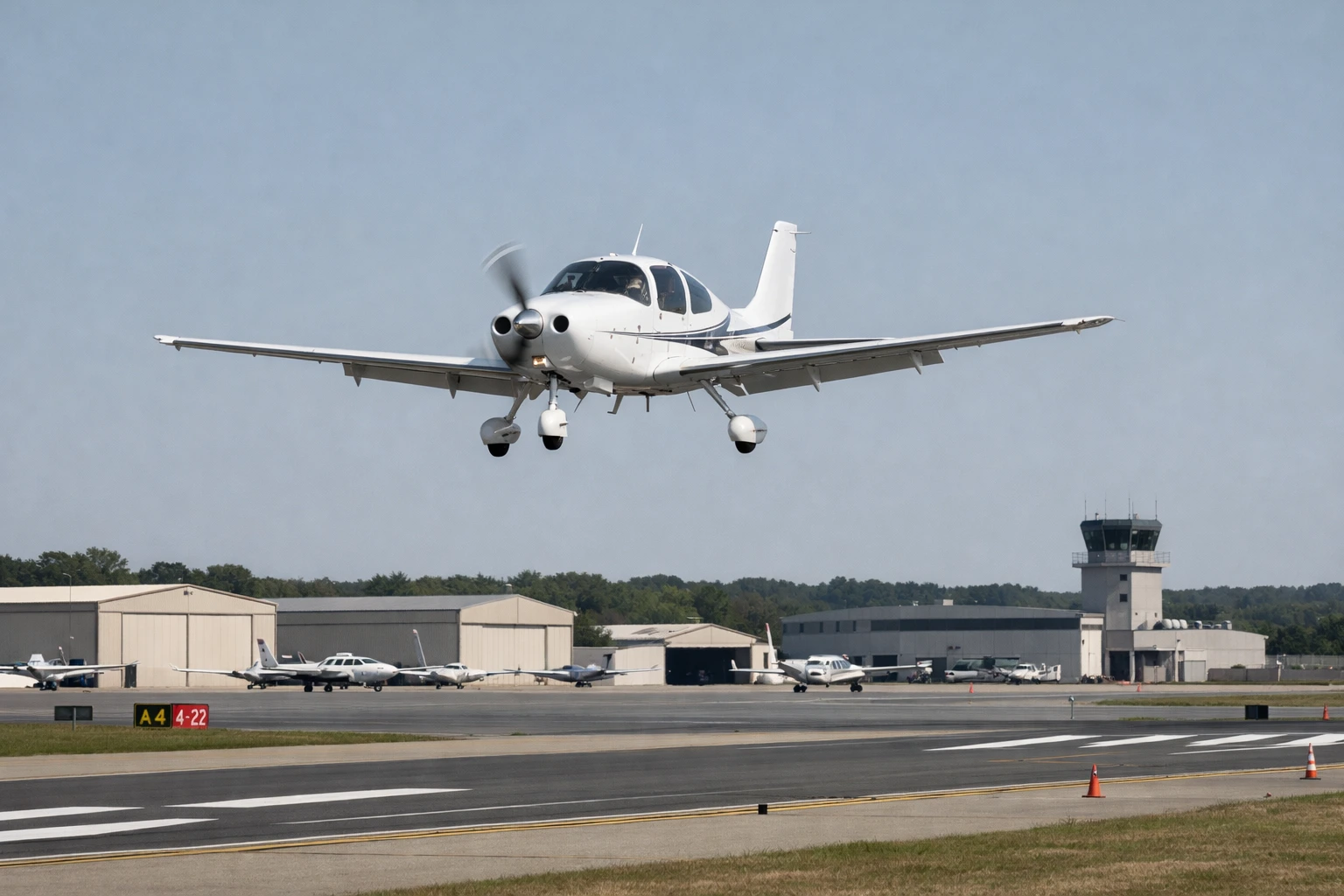
On February 29, 2012, a Cirrus Design Corp. SR22, registration N544SR, crashed near Melbourne, Florida, while maneuvering for landing at Melbourne International Airport. The private pilot and two passengers were fatally injured. The accident occurred during traffic pattern sequencing for runway 9R.
According to investigative summaries, the pilot contacted the control tower approximately five miles south of the airport and requested a full-stop landing. The tower instructed the pilot to report on the downwind leg for runway 9R. At the time, a Cirrus SR20 was on a five-mile final for the same runway and had been cleared for a touch-and-go landing. The controller advised the SR22 to extend the downwind leg to accommodate the traffic ahead. The SR22 pilot later requested a long landing to reduce taxi distance to the fixed-base operator and was cleared accordingly.
The controller subsequently asked the pilot to confirm visual contact with the aircraft on final. The pilot responded that he was on a “real short base.” The controller then instructed the pilot to “cut it in tight” to runway 9R. Witnesses described the aircraft entering a steep bank followed by a rapid, vertical descent into wooded terrain short of the runway.
Accidents occurring during the traffic pattern phase fall within the broader framework of aviation accident litigation, where reconstruction often centers on airspeed management, load factor, traffic sequencing, and aerodynamic margins at low altitude.
Traffic Pattern Geometry and Accelerated Stall Considerations
During base-to-final turns, aircraft are frequently operated at reduced airspeeds and low altitude. Increases in bank angle raise load factor and correspondingly increase aerodynamic stall speed. A coordinated but steep turn at low airspeed reduces available margin above stall, particularly when maneuvering adjustments are made in response to traffic or spacing instructions.
Investigators reviewing such accidents typically evaluate:
- radar and ADS-B track data
- bank angle and descent rate profiles
- indicated airspeed trends
- air traffic control communications
- pilot experience and recency
Wreckage Examination Findings
Investigative summaries indicated that all major components were located at the accident site. An odor of fuel was present. The engine compartment, firewall, cockpit, and cabin areas were destroyed by impact forces, while the empennage and tail section remained largely intact. Control cable continuity was established from the tail-mounted control surfaces to the cockpit area. Continuity to the wing-mounted control surfaces could not be fully established due to multiple cable separations displaying characteristics consistent with overload failure.
The three-bladed propeller was separated from the engine and located within the impact crater. The blades exhibited aft bending, leading-edge gouging, polishing, and chordwise scratching. The Cirrus Airframe Parachute System (CAPS) was deployed and found entangled in the wreckage. Avionics components, including the Avidyne Primary Flight Display (PFD), Multifunction Flight Display (MFD), and Electronic Ground Proximity Warning System (EGPWS), were recovered and forwarded to the NTSB Recorders Laboratory for further analysis.
Aircraft Characteristics and Data Integration
The Cirrus SR22 is a composite, low-wing aircraft equipped with a ballistic parachute recovery system. Determination of whether an aerodynamic stall occurred requires integration of flight track data, airspeed reconstruction, control continuity findings, propeller signatures, avionics data, and communication transcripts. Structured evaluation of these elements reflects the analytical approach described in the firm’s Complex Aviation Litigation Methodology overview.
The National Transportation Safety Board’s investigative process—including wreckage documentation, systems examination, and recorder analysis—is outlined in the firm’s explanation of the NTSB Investigation Process.
Low-Altitude Maneuvering Risk
Approach and landing phases account for a significant percentage of general aviation accidents. Events involving steep base-to-final turns require careful aerodynamic and operational reconstruction to determine whether load factor increase, airspeed decay, communication timing, or other operational factors contributed to loss of control.
Evaluation of such accidents depends upon disciplined integration of aerodynamic principles, recorded communications, and physical evidence rather than single-factor attribution.
Contact Katzman Lampert & Stoll
Katzman Lampert & Stoll welcomes inquiries from individuals, families, and referring attorneys regarding aviation accident matters nationwide. The firm has represented clients in aviation cases arising throughout the United States, including matters involving commercial airline accidents, private and corporate aircraft, helicopter operations, and aircraft product liability litigation.
If you have questions following an aircraft accident or would like to discuss a potential aviation case, the firm can provide an initial assessment of the circumstances and explain the legal and investigative process involved.
The firm represents clients on a contingency fee basis. Legal fees are paid only if a recovery is obtained on behalf of the client.
You may contact the firm by telephone at 248‑258‑4800, or, if you prefer, you may send a message through the secure contact form on this page.
This information will only be used in connection with your inquiry and will not be stored by Katzman Lampert & Stoll, or disseminated in any way.
The use of the Internet or this form for communication with the firm or any individual member of the firm does not establish an attorney-client relationship. Confidential or time-sensitive information should not be sent through this form.
- Aviation Accident Litigation
- Private and Corporate Aircraft Accident Litigation
- Military & Government Contractor Aviation Litigation
- Complex Aviation Litigation Methodology
- NTSB Investigations & Civil Aviation Claims
- Federal Preemption in Aviation Product Liability
- Defeating GARA Defenses in Aviation Product Liability Litigation
- For Families
MICHIGAN OFFICE
Katzman Lampert & Stoll
950 West University Dr #101
Rochester, MI 48307
E-mail: Click to use our Contact Form
Toll-Free: (866) 309-6097
Phone: (248) 258-4800
Fax: (248) 258-2825
COLORADO OFFICE
Katzman Lampert & Stoll
9596 Metro Airport Ave.
Broomfield, CO 80021
E-mail: Click to use our Contact Form
Toll-Free: (866) 309-6097
Phone: (303) 465-3663
Fax: (303) 867-1565
PENNSYLVANIA OFFICE
Katzman Lampert & Stoll
121 N. Wayne Ave. # 205
Wayne, PA 19087
E-mail: Click to use our Contact Form
Toll-Free: (866) 309-6097
Phone: (610) 686-9686
Fax: (610) 686-9687