
Southwest Airlines Flight 31 Nashville TN Plane Crash
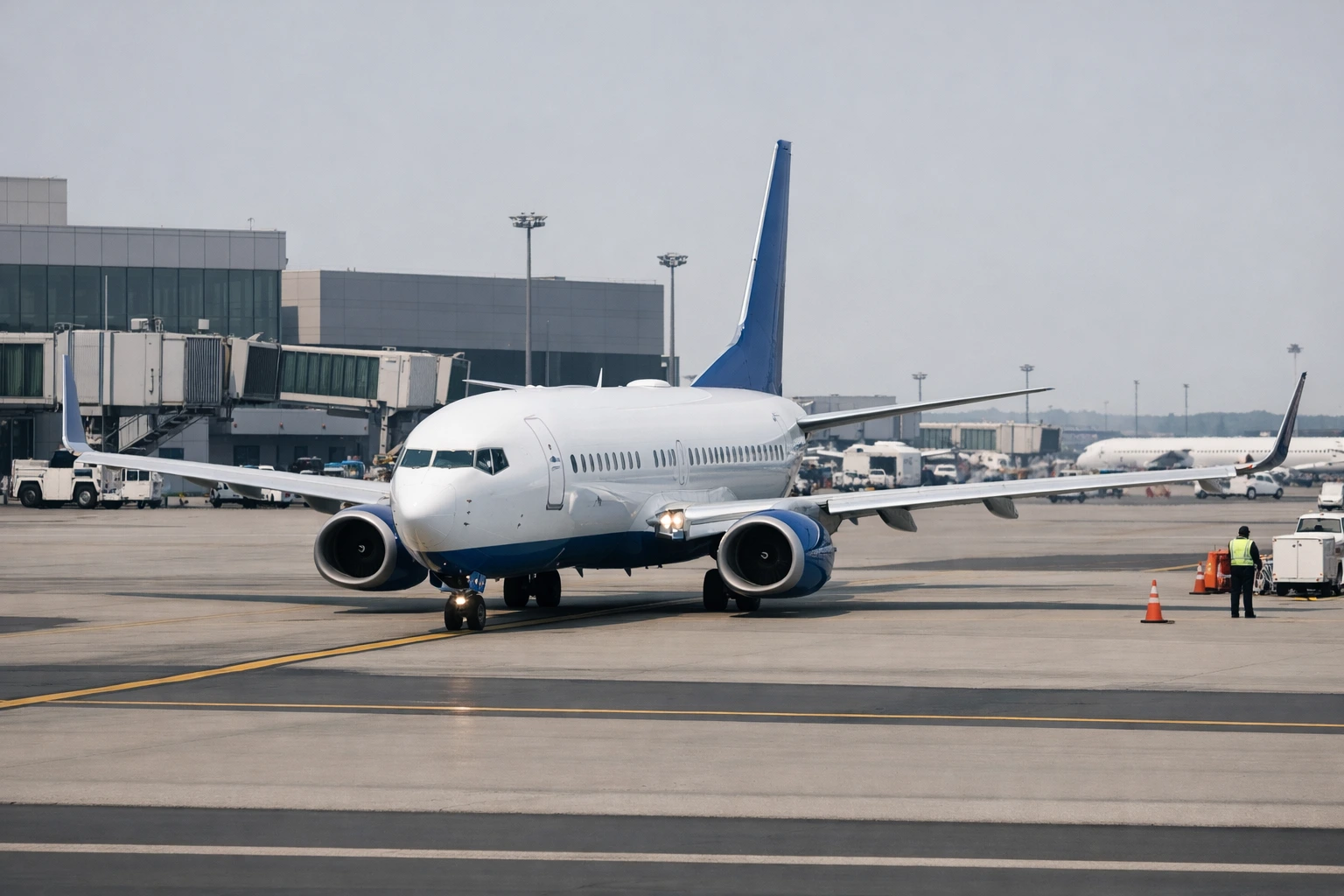
On December 15, 2015, a Boeing 737 operated by Southwest Airlines exited a paved taxiway surface while approaching the gate at Nashville International Airport. The aircraft came to rest in the grass adjacent to the taxiway. Several occupants reported injuries, and the aircraft was subsequently evacuated.
Events occurring during taxi and gate-approach phases fall within the broader framework of aviation litigation involving airport surface-movement incidents, where analysis frequently focuses on ground movement procedures, surface condition, braking performance, and airport layout.
Accident Summary
| Date | December 15, 2015 |
|---|---|
| Location | Nashville, Tennessee, United States |
| Aircraft | Boeing 737 (Southwest Airlines) |
| Operation | Part 121 scheduled passenger flight |
| Mission | Commercial passenger service |
| Occupants | 133 passengers (crew count not publicly reported) |
| Fatalities | 0 |
| Phase of Flight | Taxi / gate approach |
| Investigation | FAA; NTSB involvement not publicly reported |
Ground Operations and Surface Movement
Taxiway excursions differ materially from runway takeoff or landing accidents. During low-speed surface operations, investigators typically evaluate:
- taxi routing and clearance instructions
- aircraft speed during gate approach
- surface conditions and pavement integrity
- lighting and signage
- braking system performance
- crew workload and situational awareness
In commercial airline operations, gate sequencing may require directional adjustments while transitioning from taxiway to apron areas. Even at reduced speeds, lateral deviation from paved surfaces can result in structural damage or passenger injury.
Aircraft Systems and Structural Considerations
In taxiway excursion events involving transport-category aircraft such as the Boeing 737, examination often includes landing gear integrity, steering mechanisms, braking system function, and potential subsurface conditions that may contribute to pavement failure or directional deviation.
When injuries occur during ground movement events, investigation typically includes documentation of aircraft configuration, deceleration forces, cabin conditions, and evacuation procedures.
Regulatory Investigation
The Federal Aviation Administration and, where applicable, the National Transportation Safety Board review operational and technical aspects of such events. Investigative processes may include crew interviews, review of airport surface surveillance data, examination of aircraft maintenance records, and analysis of airport infrastructure.
The structure and stages of federal aviation investigations are explained in the firm’s overview of the NTSB Investigation Process.
Commercial Airline Ground Event Risk
Although ground-movement events are generally lower energy than in-flight accidents, they present distinct operational and infrastructure-related considerations. Evaluation of causation requires integration of crew procedure, airport design, aircraft systems, and environmental conditions rather than reliance on a single explanatory factor.
Consultation Regarding Aviation Accident Investigations
Families, referring attorneys, and journalists sometimes seek legal consultation or technical insight regarding aviation accidents and investigative issues discussed in these analyses. Inquiries may be directed to Katzman, Lampert & Stoll at the link below.
Aviation Accident Litigation
- Aviation Accident Litigation
- Private and Corporate Aircraft Accident Litigation
- Military & Government Contractor Aviation Litigation
- Complex Aviation Litigation Methodology
- NTSB Investigations & Civil Aviation Claims
- Federal Preemption in Aviation Product Liability
- Defeating GARA Defenses in Aviation Product Liability Litigation
- For Families and Survivors
MICHIGAN OFFICE
Katzman Lampert & Stoll
950 West University Dr #101
Rochester, MI 48307
E-mail: Click to use our Contact Form
Toll-Free: (866) 309-6097
Phone: (248) 258-4800
Fax: (248) 258-2825
COLORADO OFFICE
Katzman Lampert & Stoll
9596 Metro Airport Ave.
Broomfield, CO 80021
E-mail: Click to use our Contact Form
Toll-Free: (866) 309-6097
Phone: (303) 465-3663
Fax: (303) 867-1565
PENNSYLVANIA OFFICE
Katzman Lampert & Stoll
121 N. Wayne Ave. # 205
Wayne, PA 19087
E-mail: Click to use our Contact Form
Toll-Free: (866) 309-6097
Phone: (610) 686-9686
Fax: (610) 686-9687