

Southwest Flight 1380 – Fan Blade Failures in Turbo Fan Engines
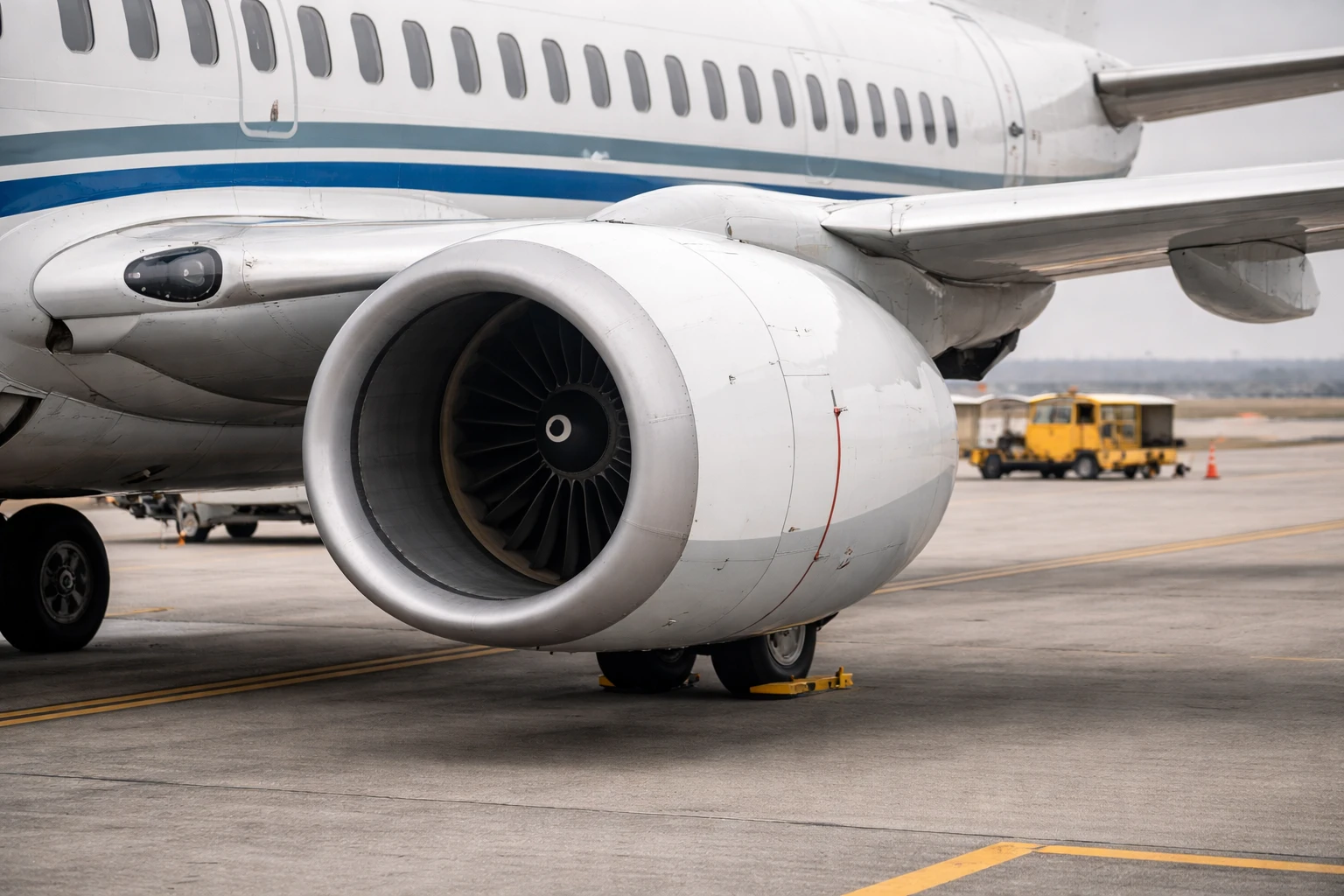
On April 17, 2018, Southwest Airlines Flight 1380 experienced an in-flight engine failure that resulted in an emergency landing in Philadelphia and a fatal passenger injury. Early reporting and the ensuing investigation focused attention on fan blade integrity, inspection methodology, and the distinction between contained and uncontained engine failure modes. Federal investigators examined the failure sequence to determine how the event developed and whether inspection and containment safeguards performed as intended.
Accident Summary
| Date | April 17, 2018 |
|---|---|
| Location | Philadelphia, Pennsylvania, United States |
| Aircraft | Boeing 737-700 |
| Operation | Scheduled passenger flight (Southwest Airlines), LaGuardia to Dallas (Flight 1380) |
| Occupants | 149 total (144 passengers; 5 crew) |
| Fatalities | 1 |
| Phase of Flight | Cruise; diversion and emergency landing |
| Investigation | National Transportation Safety Board (NTSB) |
Context for the Underlying Event
A factual overview of the emergency landing and the core investigative issues is provided in our incident analysis of Southwest Flight 1380’s emergency landing in Philadelphia.
Why Fan Blade Integrity Matters
The fan section of a turbofan engine produces a substantial portion of thrust and includes a large rotating fan whose blades experience significant cyclic loading over repeated flight cycles. Over time, fatigue mechanisms can involve crack initiation and crack propagation that may not be apparent without appropriate inspection techniques and intervals.
In aviation safety investigations involving fan blade failures, investigators often examine fracture features, metallurgical condition, service history, and inspection records to determine whether cracking developed over time and whether it was detectable within existing inspection programs.
Contained Versus Uncontained Failure Modes
Modern turbine engines are designed with containment features intended to prevent fragments from exiting the engine case or nacelle structure. When fragments escape and cause secondary damage to the aircraft, investigators examine whether the event reflects a containment limitation, a failure mode outside the assumptions of certification testing, or a sequence involving multiple component failures.
Because the safety consequences can differ substantially between contained and uncontained events, investigation and regulatory attention often focuses on both the probability of a blade failure and the consequences if containment is not achieved.
Inspection Programs and Airworthiness Directives
Regulators use tools such as airworthiness directives to address identified unsafe conditions by requiring inspection changes, component replacement, or design modifications. In fan blade integrity programs, inspection methodology can be central: different techniques may have different sensitivity to subsurface cracking or early fatigue indicators, and regulators may modify requirements as operational experience develops.
Where reporting and investigative findings indicate fatigue crack growth, the inspection record may become a key technical question, including whether the inspections contemplated by applicable directives or manufacturer recommendations were conducted and whether the inspection method used was sufficiently sensitive to detect early cracking.
Accident Investigation
Fan blade failure investigations typically rely on detailed component examination, maintenance and inspection record review, and operational data analysis to establish the failure sequence and identify contributing factors. A practical overview of how evidence is collected, preserved, and analyzed in U.S. investigations is provided in our discussion of the NTSB investigation process.
Investigators may also examine whether earlier related events or service history signaled an evolving risk. Product and fleet history can be an important context in safety analysis, particularly where similar failure modes have appeared across multiple aircraft or engine populations.
Operational and Regulatory Issues
In addition to component condition, investigations may evaluate certification assumptions related to containment performance and whether the relevant inspection regime appropriately balanced practicality against risk. Where international regulators have issued directives or guidance, the timing and scope of required actions can also be examined as part of the broader oversight picture.
These questions are typically addressed through a combination of technical findings, operational records, and regulatory documentation, rather than through early speculation about causation.
Aviation Accident Litigation
Engine failure events can raise complex technical and regulatory questions, including manufacturing controls, inspection methodology, maintenance practices, and the interaction between certification standards and post-certification corrective action. A general overview of how these matters are evaluated is provided in our discussion of aviation accident litigation.
Examples of aviation accident matters involving aircraft systems analysis and multi-party litigation issues are summarized on our Representative Aviation Matters page.
For context regarding reported outcomes in aviation-related disputes, see Selected Aviation Verdicts & Settlements.
Broader observations regarding recurring issues in reported aviation accident litigation are discussed in Aviation Crash Litigation: Common Patterns in Reported Cases.
Contact Katzman Lampert & Stoll
Katzman Lampert & Stoll welcomes inquiries from individuals, families, and referring attorneys regarding aviation accident matters nationwide. The firm has represented clients in aviation cases arising throughout the United States, including matters involving commercial airline accidents, private and corporate aircraft, helicopter operations, and aircraft product liability litigation.
If you have questions following an aircraft accident or would like to discuss a potential aviation case, the firm can provide an initial assessment of the circumstances and explain the legal and investigative process involved.
The firm represents clients on a contingency fee basis. Legal fees are paid only if a recovery is obtained on behalf of the client.
You may contact the firm by telephone at 248‑258‑4800, or, if you prefer, you may send a message through the secure contact form on this page.
This information will only be used in connection with your inquiry and will not be stored by Katzman Lampert & Stoll, or disseminated in any way.
The use of the Internet or this form for communication with the firm or any individual member of the firm does not establish an attorney-client relationship. Confidential or time-sensitive information should not be sent through this form.
- Aviation Accident Litigation
- Private and Corporate Aircraft Accident Litigation
- Military & Government Contractor Aviation Litigation
- Complex Aviation Litigation Methodology
- NTSB Investigations & Civil Aviation Claims
- Federal Preemption in Aviation Product Liability
- Defeating GARA Defenses in Aviation Product Liability Litigation
- For Families
MICHIGAN OFFICE
Katzman Lampert & Stoll
950 West University Dr #101
Rochester, MI 48307
E-mail: Click to use our Contact Form
Toll-Free: (866) 309-6097
Phone: (248) 258-4800
Fax: (248) 258-2825
COLORADO OFFICE
Katzman Lampert & Stoll
9596 Metro Airport Ave.
Broomfield, CO 80021
E-mail: Click to use our Contact Form
Toll-Free: (866) 309-6097
Phone: (303) 465-3663
Fax: (303) 867-1565
PENNSYLVANIA OFFICE
Katzman Lampert & Stoll
121 N. Wayne Ave. # 205
Wayne, PA 19087
E-mail: Click to use our Contact Form
Toll-Free: (866) 309-6097
Phone: (610) 686-9686
Fax: (610) 686-9687