

Bell 206BIII Helicopter Crash Near Pearl Harbor (N80918) — NTSB Findings
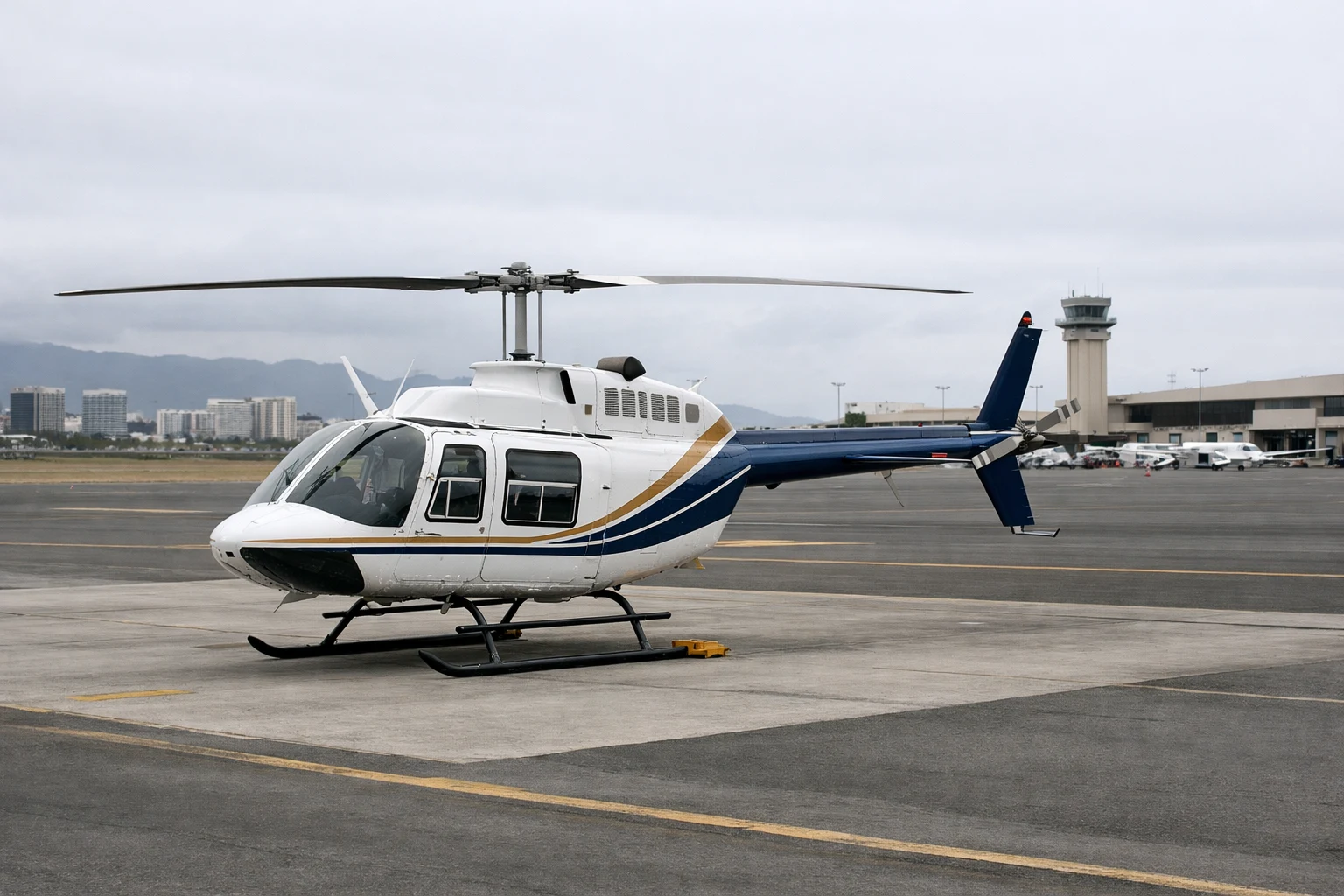
On February 18, 2016, a Bell 206BIII helicopter, registered as N80918, impacted water during a forced landing near Honolulu, Hawaii. The commercial pilot and two passengers sustained serious injuries, one passenger sustained minor injuries, and one passenger was fatally injured after the helicopter came to rest submerged near the shoreline. Federal investigators examined the in-flight mechanical failure, maintenance history, and survivability factors associated with the accident.
Accident Summary
| Date | February 18, 2016 |
|---|---|
| Location | Honolulu, Hawaii, USA |
| Aircraft | Bell 206BIII (N80918) |
| Operation | Part 91; general aviation – commercial air tour (aerial observation); local flight originating from Honolulu International Airport (HNL) |
| Occupants | 5 total (1 pilot; 4 passengers) |
| Fatalities | 1 |
| Phase of Flight | Cruise |
| Investigation | NTSB; FAA participating |
What Happened
The helicopter was being operated as a local air tour flight around Oahu with four passengers onboard. During the flight, the pilot noticed a vibration throughout the cabin that he described as “different” and initially diverted toward the destination airport. When the vibration stopped, the pilot initiated a turn so passengers could view a nearby landmark, and the vibration returned shortly thereafter.
The pilot reported that the vibration developed into a grinding sensation followed by illumination of the main rotor low rpm warning light and an increase in engine rpm such that the engine and rotor RPM indications were no longer matched. The pilot maneuvered toward the shoreline and initiated an approach to a grassy area near the Pearl Harbor Memorial visitor center, then adjusted the plan due to people in the intended landing area. The pilot turned slightly left to land in the water as close to shore as possible and reported that, about 20 feet above the water, it felt like the main rotor stalled, the helicopter lost lift, and it “fell out of the sky.”
The helicopter impacted the water and sank near the shoreline. Three passengers were able to egress after impact, but one passenger seated in the aft middle seat was trapped and later extracted by rescuers who repeatedly dove underwater to cut restraint straps. Treatment records for that passenger contained evidence consistent with drowning, and investigators could not determine whether the passenger was unable to extricate from the restraint system or whether a period of unconsciousness contributed to the outcome.
Aircraft and Operational Context
The accident helicopter was a Bell 206BIII, powered by a Rolls-Royce Allison 250-C20B turboshaft engine, and it was not equipped with an emergency float system. The operator conducted air tours under a Letter of Authorization and employed a small staff, including a maintenance assistant who did not hold mechanic (A&P) certification. The pilot held a commercial rotorcraft-helicopter certificate with instrument helicopter and flight instructor privileges and estimated about 900 total flight hours, including time in the accident make and model.
According to the investigation, the helicopter had recently undergone maintenance involving the engine-to-transmission drive shaft assembly, but investigators found that aspects of this work were not documented in maintenance records. Records review also identified gaps related to inspection documentation, including a lack of entries referencing current annual and 100-hour inspections. Investigators further reviewed operator-provided component status information indicating several required component inspections were overdue at the time of the accident.
Accident Investigation
Investigations of mechanical failures typically proceed from scene recovery and component examinations to maintenance-record review, metallurgical analysis, and interviews with maintenance personnel and operator management, as outlined in KLS’s overview of the NTSB investigation process. In this case, the NTSB documented that the helicopter was submerged and later removed from the water and moved to a secure location for detailed examination. Investigators evaluated the drivetrain, flight controls, engine, and transmission, and also conducted interviews with the pilot, company owner, and maintenance assistant.
Postaccident examination found the engine-to-transmission drive shaft separated at the transmission side and showed evidence consistent with overheating and lack of lubrication at the forward coupling. The investigation documented worn coupling spline features, missing temperature plates on the forward outer coupling, and hardware conditions that included loose bolts and missing attachment bolts in the forward coupling area. Metallurgical review described evidence consistent with elevated-temperature effects on coupling components and attachment hardware.
Interviews and records review indicated recent maintenance activity involving the drive shaft assembly that was not recorded in the helicopter’s maintenance logbooks. Investigators concluded that the coupling assembly likely failed by overheating due to lack of lubrication, resulting in separation of the engine-to-transmission drive shaft such that the engine could continue to run but could not drive the main rotor. The NTSB determined the probable cause was the in-flight failure of the engine-to-transmission drive shaft due to improper maintenance, which resulted in low main rotor rpm and a subsequent hard landing to water.
Operational and Regulatory Issues
For commercial air tours conducted under Part 91 and related authorizations, regulatory requirements can include inspection and recordkeeping obligations tied to carrying passengers for hire. Investigators identified gaps in recorded inspection documentation and noted that multiple required component inspections were overdue based on operator-provided status information. The investigation also reviewed how maintenance responsibilities were assigned and supervised within a small operation where a non-certificated maintenance assistant performed duties under the direction of a certificated mechanic.
The investigation also addressed FAA oversight practices applicable to air tour operations and noted that increased inspection activity could have uncovered maintenance and documentation deficiencies. In addition to maintenance and oversight issues, investigators documented survivability factors relevant to overwater forced landings, including the absence of an emergency float system, the helicopter’s submergence, and the circumstances affecting passenger egress and rescue. The investigation reviewed life preserver condition and use, but could not determine when or how a life preserver associated with the trapped passenger was inflated.
Aviation Accident Litigation
While the NTSB’s work is focused on safety findings, civil claims arising from a commercial air tour accident often require a separate evaluation of maintenance practices, recordkeeping, and operational oversight, consistent with the processes described in KLS’s overview of aviation accident litigation. When the investigation identifies maintenance-related component failures, litigation typically centers on technical proof regarding what work was performed, whether it followed manufacturer instructions, and how inspection and documentation duties were managed. The analysis is fact-dependent and should be grounded in the investigative record and underlying maintenance documentation.
Cases involving rotorcraft drivetrain failures and passenger injuries can also involve careful review of the operator’s maintenance control system, supervision of maintenance personnel, and compliance with inspection intervals, similar to issues that arise in matters described in KLS’s representative aviation matters. In overwater events, the factual record can also include survivability and rescue evidence, such as restraint function, passenger briefing practices, and the availability and condition of flotation equipment. Each issue must be evaluated against the verified evidence, including component examinations and maintenance records.
Where aviation cases resolve, outcomes can turn on the completeness of maintenance records, expert analysis of component condition, and detailed damages proof, consistent with the types of results collected in KLS’s selected aviation verdicts and settlements. Litigation timelines can differ from the investigative timeline, but both rely on disciplined fact development and preservation of critical components. For this accident, the drive shaft assembly and coupling components were central physical evidence.
For broader context on how injury severity and operational setting can influence civil-case posture over time, KLS discusses themes in its overview of aviation crash verdict trends. Any case-specific conclusions should be tied to the operator’s documented maintenance actions, the component failure evidence, and the verified sequence and survivability facts established in the investigative record. As with all aviation matters, early summaries should be updated only when new, reliable documentation becomes publicly available.
Contact Katzman Lampert & Stoll
Katzman Lampert & Stoll welcomes inquiries from individuals, families, and referring attorneys regarding aviation accident matters nationwide. The firm has represented clients in aviation cases arising throughout the United States, including matters involving commercial airline accidents, private and corporate aircraft, helicopter operations, and aircraft product liability litigation.
If you have questions following an aircraft accident or would like to discuss a potential aviation case, the firm can provide an initial assessment of the circumstances and explain the legal and investigative process involved.
The firm represents clients on a contingency fee basis. Legal fees are paid only if a recovery is obtained on behalf of the client.
You may contact the firm by telephone at 248‑258‑4800, or, if you prefer, you may send a message through the secure contact form on this page.
This information will only be used in connection with your inquiry and will not be stored by Katzman Lampert & Stoll, or disseminated in any way.
The use of the Internet or this form for communication with the firm or any individual member of the firm does not establish an attorney-client relationship. Confidential or time-sensitive information should not be sent through this form.
MICHIGAN OFFICE
Katzman Lampert & Stoll
950 West University Dr #101
Rochester, MI 48307
E-mail: Click to use our Contact Form
Toll-Free: (866) 309-6097
Phone: (248) 258-4800
Fax: (248) 258-2825
COLORADO OFFICE
Katzman Lampert & Stoll
9596 Metro Airport Ave.
Broomfield, CO 80021
E-mail: Click to use our Contact Form
Toll-Free: (866) 309-6097
Phone: (303) 465-3663
Fax: (303) 867-1565
PENNSYLVANIA OFFICE
Katzman Lampert & Stoll
121 N. Wayne Ave. # 205
Wayne, PA 19087
E-mail: Click to use our Contact Form
Toll-Free: (866) 309-6097
Phone: (610) 686-9686
Fax: (610) 686-9687